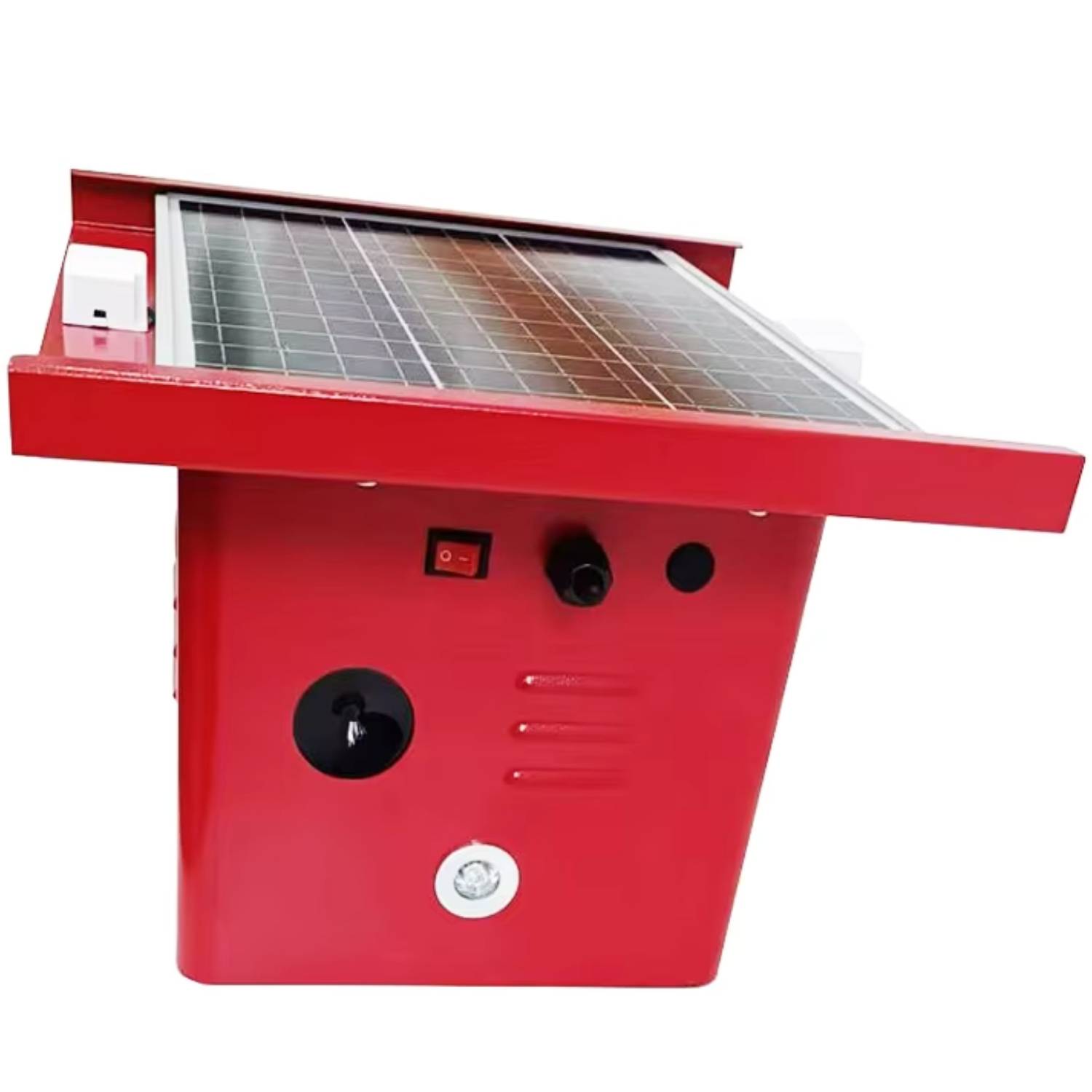
I ordered this item for a friend who has just had there house built. She was troubled by an ever increasing number of pigeons. This product sends them flying! She had me order 2 more of them for her.
Johnathon
Ultrasonic Squirrel Deterrent | Ultrasonic Squirrel Repellents | Ultrasonic Squirrel Repeller
Solar Powered Ultrasonic Squirrel Repellent – Weatherproof Squirrel Deterrent
Motion activated squirrel control device using high frequency sound waves. Ideal for patios, gardens, balconies, & outdoor spaces. Works best as part of a comprehensive squirrel management strategy.
Original price was: $349.$299Current price is: $299.
FREE FAST SHIPPING ACROSS CANADA FOR ALL ORDERS OF $75+ or more - (Save $22)
Smart Motion Detection for Fast Squirrel Control
Using advanced radar motion detection and ultrasonic technology, this repeller quickly senses squirrel movement & immediately activates deterrent signals.
The powerful ultrasonic waves help drive away other common intruders such as pest birds, chipmunks, raccoons, deer, cats, dogs, and rabbits before they can damage your property.
DUE TO CURRENT DEMAND PLEASE ALLOW 5-7 DAYS SHIPPING
Direct To Your Door - All Across Canada
Original price was: $349.$299Current price is: $299.
Powerful Outdoor SQUIRREL Repeller
Protect your garden, yard, farm, or property from unwanted squirrels using advanced ultrasonic sound and flashing strobe lights. This repeller helps deter other common intruders like deer, raccoons, pest birds, rabbits, skunks, cats, and dogs. Adjustable settings allow you to customize the protection based on the types of animals in your area.
Multi-Layer Animal Deterrent System
Flexible Mounting for Targeted Protection
Mount the repeller on fences, trees, sheds, decks, or eaves so you can place protection exactly where animals enter or nest not just at ground level.
Weather Resistant Outdoor Design
A sealed back cover protects the controls from harsh weather conditions. The angled housing helps minimize direct rain exposure while maintaining wide angle motion detection and effective sound projection.
-
How do I start a return?
Visit our Returns Center https://gutterguards.net.nz/terms-conditions/returns-policy or contact customer support to initiate the process.
-
HOW DO I KNOW IF MY ORDER HAS BEEN SHIPPED?
Once your order is shipped, it will be marked as complete in our database and you will receive a confirmation email with a tracking number.
-
Is my personal information secure?
Yes, we use industry-standard encryption and secure payment gateways to protect your information.
-
WHAT ARE YOUR DELIVERY OPTIONS AND HOW LONG WILL IT TAKE?
- CANADA: Free shipping, 5-7 days
- Other countries: Free shipping, 7-10 days
OUR SHIPPING PARTNERS

-
When will I receive my refund?
Refunds are processed within 24-48 hours after the returned item is received and inspected.
-
WHICH PAYMENT METHODS ARE ACCEPTED?
We currently only accept credit card payments, PayPal & Crypto currency. More payment methods will be added in the future.
-
Can I modify or cancel my order after it's placed?
Orders can only be modified or canceled within 1 hour of placement. Please contact our support team as soon as possible.
-
WHAT CURRENCY ARE THE PRICES DISPLAYED IN?
All of our prices are displayed in $CAD - Canadian Dollars
-
Do I need an account to place an order?
No, you can checkout as a guest. However, creating an account allows for faster checkout and order tracking.
-
What is your return policy?
We offer a 15-day return window on most items. Products must be unused and in original packaging.
-
How can I track my order?
Once your order ships, you’ll receive a confirmation email with a tracking link.
-
DO I GET A RECEIPT FOR MY ORDER?
You will be sent a receipt for your order by email after payment is made. You will also receive a confirmation email with a tracking number once your item has been shipped.
-
How can I contact customer support?
You can reach us via email at theteam@customersupport.care or through our AI chat.
-
DO YOU HAVE A SHOP LOCATION?
We are a “online supplier”, with no physical shop or premises. In this way, we are able to pass our considerable savings directly to you.
-
I HAVEN'T RECEIVED MY ORDER YET! IS IT LOST?
If you have any concerns with your order, please contact our support team by email and they will be glad to assist you. Most emails are answered within 1 business day.
Support Team: theteam@customersupport.care
-
How do I place an order?
Simply browse our products, add items to your cart, and proceed to checkout. Follow the prompts to enter shipping details and payment information.
-
IS THE ULTRASONIC SQUIRREL DETERRENT WEATHERPROOF?
The product page describes a weather resistant outdoor design with a sealed back cover and angled housing to help protect the controls from rain and exposure.
-
IS THIS ULTRASONIC SQUIRREL DETERRENT GOOD FOR FARMS AND LARGER OUTDOOR PROPERTIES?
Yes. The product page specifically mentions yards, farms, gardens, and broader outdoor areas, making it suitable for both residential and some larger open-space applications.
-
DOES THE DEVICE ONLY REPEL SQUIRRELS?
No. The product page says the unit may also help deter chipmunks, raccoons, deer, rabbits, cats, dogs, pest birds, skunks, and other common intruders depending on settings and conditions.
-
CAN I MOVE THE ULTRASONIC SQUIRREL DETERRENT IF SQUIRREL ACTIVITY CHANGES?
Yes. Because it mounts to common outdoor structures, the device can be repositioned if squirrels begin using a different route or if you want to target another area of the property.
-
WHAT SEO KEYWORDS FIT THIS PRODUCT BEST?
Useful search phrases include ultrasonic squirrel deterrent, ultrasonic squirrel repeller, ultrasonic squirrel repellent, motion activated squirrel deterrent, and solar powered squirrel repellent.
-
WHERE CAN I INSTALL AN ULTRASONIC SQUIRREL REPELLER?
This ultrasonic squirrel deterrent can be mounted on fences, trees, sheds, decks, eaves, and other outdoor structures. That flexibility helps you target the spots where squirrels enter, forage, or nest.
-
CAN ULTRASONIC SQUIRREL DETERRENTS ALSO TARGET RACCOONS AND RABBITS?
The product page states that the unit may help deter raccoons, rabbits, deer, cats, dogs, skunks, and pest birds in addition to squirrels, depending on setup and conditions.
-
CAN I ADJUST THE SETTINGS ON THE ULTRASONIC SQUIRREL DETERRENT?
Yes. The device is described as having adjustable settings and multiple operating modes so users can tailor the deterrent response to the animals active in their area.
-
WHY BUY AN ULTRASONIC SQUIRREL DETERRENT ONLINE IN CANADA?
Canadian buyers often look for an easy outdoor squirrel control device that is weather resistant, motion activated, and simple to mount in gardens, decks, balconies, and yard spaces.
-
DOES THE ULTRASONIC SQUIRREL DETERRENT USE MOTION DETECTION?
Yes. It is promoted as a motion activated squirrel deterrent with radar motion detection, so the unit responds quickly when movement is detected near the protected area.
-
IS THIS ULTRASONIC SQUIRREL DETERRENT SUITABLE FOR DECKS AND BALCONIES?
Yes. Decks and balconies are specifically mentioned among the types of outdoor areas where the unit can be used to discourage squirrel activity.
-
CAN ULTRASONIC SQUIRREL REPELLENTS HELP PROTECT BIRD FEEDERS AND GARDEN BEDS?
They may help when installed to cover the approach routes and activity zones around feeders, beds, or planting areas. Performance can vary with layout, animal behaviour, and competing food sources.
-
IS THIS ULTRASONIC SQUIRREL REPELLER SOLAR POWERED?
Yes. The product page describes it as a solar powered ultrasonic squirrel repellent, which helps support outdoor use without relying solely on wired power.
-
CAN THE ULTRASONIC SQUIRREL DETERRENT BE MOUNTED ABOVE GROUND LEVEL?
Yes. The product page notes mounting on fences, trees, sheds, decks, or eaves, which means it can be placed above ground level closer to common squirrel routes.
-
DOES THE DEVICE HAVE A STRONG OUTDOOR HOUSING?
Yes. The weather resistant sealed housing is designed for outdoor use and intended to protect the controls in rain and changing weather conditions.
-
DOES THE ULTRASONIC SQUIRREL REPELLENT INCLUDE FLASHING LIGHTS?
Yes. The product description mentions flashing strobe lights and a nighttime strobe mode that can add another layer of deterrence, especially for nocturnal visitors.
-
WILL WALLS, FENCING, OR SHRUBS AFFECT AN ULTRASONIC SQUIRREL DETERRENT?
Yes. Obstacles can affect line of detection and how deterrent signals travel, which is why placement in a clear, targeted position is important.
-
DO ULTRASONIC SQUIRREL REPELLENTS REQUIRE CHEMICALS OR BAIT?
No. One of the advantages of an ultrasonic squirrel deterrent is that it does not rely on poison, sprays, traps, or bait stations to operate.
-
IS AN ULTRASONIC SQUIRREL DETERRENT HUMANE?
It is generally promoted as a humane, non-lethal pest control option because it aims to discourage animals from staying in the area rather than trapping or poisoning them.
-
CAN I USE THE ULTRASONIC SQUIRREL DETERRENT IN GARDENS AND PATIOS?
Yes. It is marketed for gardens, patios, balconies, yards, farms, and other outdoor spaces where squirrels and similar pests create damage or disturbance.
-
HOW LARGE AN AREA CAN AN ULTRASONIC SQUIRREL DETERRENT PROTECT?
Coverage depends on placement, sightline, motion detection angle, and surrounding obstacles. Mounting the device where squirrels actually travel is key to getting better real-world performance.
-
WILL THE ULTRASONIC SQUIRREL REPELLER WORK AT NIGHT?
Yes. The product page mentions a nighttime strobe function to help discourage nocturnal pests such as raccoons, skunks, and cats in addition to daytime squirrel activity.
-
DO YOU SHIP THE ULTRASONIC SQUIRREL REPELLER ACROSS CANADA?
Yes. The product page advertises Canada-wide shipping with typical delivery in around 5 to 7 days and free shipping on qualifying orders.
-
CAN I USE MORE THAN ONE ULTRASONIC SQUIRREL DETERRENT ON A PROPERTY?
Yes. Larger properties or complex layouts may benefit from multiple units so blind spots and separate squirrel entry points can be covered more effectively.
-
WHAT OPERATING MODES DOES THIS ULTRASONIC SQUIRREL REPELLER HAVE?
The page mentions motion detection mode, continuous operation, cycling frequencies, nighttime strobe use, and an optional predator sound mode for broader pest deterrent coverage.
-
CAN ULTRASONIC SQUIRREL REPELLENTS REPLACE ALL OTHER SQUIRREL CONTROL METHODS?
They usually work best as part of a wider squirrel management strategy. The product page itself notes that the device works best within a comprehensive squirrel control plan.
-
IS AN ULTRASONIC SQUIRREL REPELLER A GOOD OPTION FOR PEOPLE WHO DO NOT WANT SPIKES OR TRAPS?
Yes. Many buyers choose an ultrasonic squirrel deterrent when they want a non-contact, non-lethal electronic option for outdoor pest management.
-
IS THE ULTRASONIC SQUIRREL DETERRENT A MAINTENANCE-FRIENDLY OUTDOOR PEST SOLUTION?
Yes. Compared with traps or spray-based repellents, an ultrasonic squirrel deterrent can be a lower-maintenance option once mounted and positioned correctly, especially when used as part of a broader deterrent plan.
-
WHAT IS AN ULTRASONIC SQUIRREL DETERRENT AND HOW DOES IT WORK?
An ultrasonic squirrel deterrent is an electronic device that uses high-frequency sound, motion activation, and in some modes flashing light to discourage squirrels from entering protected outdoor spaces. It is designed to react when animal movement is detected and create an uncomfortable environment for pests.
-
WHAT MAKES THIS A SMART MOTION ACTIVATED SQUIRREL DETERRENT?
The combination of radar motion detection, ultrasonic sound, flashing strobe features, and adjustable modes makes it a more responsive deterrent than a basic always-on unit.
Ultrasonic Squirrel Deterrent: Do Ultrasonic Squirrel Repellents and Ultrasonic Squirrel Repellers Actually Work?
The promise is appealing. Plug in a device, press a button, and an invisible wall of high-frequency sound drives squirrels away from your property without chemicals, without physical barriers, and without you lifting anything heavier than a power cable. Ultrasonic squirrel deterrent devices have been marketed to homeowners for years as a clean, effortless solution to one of the most frustrating pest problems in residential areas. But the reality of ultrasonic squirrel repellents is more nuanced than the packaging suggests, and understanding what these devices can and cannot do is essential before you invest in one as part of your squirrel control strategy.
This guide takes an honest, evidence-based look at ultrasonic squirrel repellers. It explains how the technology works, examines the factors that affect performance, addresses the common misconceptions that lead to buyer disappointment, and helps you determine whether an ultrasonic device deserves a place in your particular squirrel management plan or whether your situation calls for a different approach entirely.
How Ultrasonic Squirrel Deterrents Work
Ultrasonic devices emit high-frequency sound waves above the range of normal human hearing, typically between 20,000 and 65,000 hertz. The theory behind ultrasonic squirrel repellents is that these frequencies create an acoustic environment that squirrels find irritating, disorienting, or uncomfortable, motivating them to leave the affected area and avoid returning as long as the device is active.
The Science of Ultrasonic Sound
Sound travels as pressure waves through air, and the frequency of those waves determines whether we perceive them as low rumbles, mid-range speech, or high-pitched whines. Humans can typically hear frequencies between 20 and 20,000 hertz, with sensitivity declining at higher frequencies as we age. Squirrels and many other small mammals have a wider hearing range that extends above 40,000 hertz, which means they can perceive sounds that are completely inaudible to the human ear. Ultrasonic squirrel repellers exploit this difference by broadcasting frequencies that fall within the squirrel’s hearing range but outside the human range, creating a deterrent effect that the user cannot hear.
What Happens When a Squirrel Encounters Ultrasonic Sound
When an ultrasonic squirrel deterrent is functioning as intended, the sound waves create a zone of acoustic discomfort around the device. A squirrel entering this zone hears an intense, unpleasant sound that it instinctively wants to move away from, similar to how a human would react to a continuous, piercing alarm. The squirrel associates the discomfort with the location and learns to avoid the area, redirecting its activity to routes and spaces where the sound is not present.
This is the theory. In practice, the degree to which individual squirrels respond to ultrasonic sound varies considerably based on the frequency used, the sound pressure level, the environmental conditions, and the individual animal’s sensitivity and motivation. A mildly curious squirrel investigating a new garden may be easily discouraged by an ultrasonic signal, while a squirrel with an established nest in your attic and a strong territorial attachment to your property may tolerate significant acoustic discomfort rather than abandon a location it considers home.
Types of Ultrasonic Squirrel Repellers
The market for ultrasonic squirrel repellents includes several device categories, each designed for different installation scenarios and coverage requirements.
Plug-In Indoor Units
Indoor ultrasonic squirrel deterrent units plug into a standard electrical outlet and emit continuous or intermittent ultrasonic pulses designed to drive squirrels from enclosed spaces such as attics, garages, sheds, and crawl spaces. These units are compact, require no installation beyond plugging them in, and draw minimal electricity. Their effective range varies by model but typically covers an area of 30 to 100 square metres depending on the sound pressure level and the acoustic properties of the space.
Indoor units benefit from the enclosed environment they operate in. Walls, floors, and ceilings reflect ultrasonic sound waves back into the room, maintaining the sound pressure level throughout the space rather than allowing it to dissipate into open air. This reflection effect makes indoor units generally more effective than outdoor models because the sound has nowhere to escape and the squirrel cannot simply move a few metres away to find relief from the noise.
Battery and Solar-Powered Outdoor Units
Outdoor ultrasonic squirrel repellers are standalone devices designed to protect gardens, patios, bird feeding areas, and other exterior spaces. They are typically powered by batteries, solar panels, or a combination of both, allowing placement anywhere in the garden without the need for a mains power connection. Many outdoor units include a motion sensor that activates the ultrasonic signal only when an animal is detected within range, conserving battery life and adding the startle element of a sudden sound burst to the deterrent effect.
Outdoor units face greater performance challenges than indoor models because ultrasonic sound dissipates rapidly in open air. There are no walls to reflect the sound back into the coverage zone, wind carries the sound waves away from the intended direction, and physical obstacles such as fences, bushes, and garden structures create shadow zones where the sound does not reach. The effective outdoor range of most consumer ultrasonic devices is significantly less than the manufacturer’s stated maximum, particularly in real-world garden environments with vegetation, structures, and variable wind conditions.
Motion-Activated Combination Devices
Some ultrasonic squirrel deterrent products combine the ultrasonic signal with additional deterrent features such as a flashing strobe light, a sudden water spray, or an audible alarm that operates alongside the ultrasonic pulse. These combination devices aim to overwhelm the squirrel’s senses from multiple angles simultaneously, creating a more intense deterrent experience than ultrasonic sound alone. The multi-sensory approach can be more effective than a single-mode device because it reduces the squirrel’s ability to habituate to any one stimulus by presenting multiple unpredictable stimuli at once.
Commercial-Grade Ultrasonic Systems
Commercial-grade ultrasonic squirrel repellents are higher-powered units designed for larger coverage areas and more demanding applications such as warehouses, agricultural buildings, and commercial rooftop installations. These systems use multiple transducers, higher sound pressure levels, and frequency-sweeping technology that continuously varies the output frequency to prevent habituation. Commercial systems are significantly more powerful than consumer devices and are typically installed by pest control professionals as part of a comprehensive site management plan rather than purchased off the shelf by homeowners.
Factors That Affect Ultrasonic Repeller Performance
The effectiveness of any ultrasonic squirrel deterrent depends on a complex interaction of device specifications, environmental conditions, and animal behaviour variables. Understanding these factors helps you set realistic expectations and optimise your device placement for the best possible results.
Frequency and Frequency Variation
Not all ultrasonic frequencies are equally irritating to squirrels, and individual animals may respond differently to different frequencies based on their age, hearing sensitivity, and prior exposure. Devices that emit a single fixed frequency may be effective initially but lose their deterrent power as squirrels habituate to the predictable, unchanging sound. Devices that sweep through a range of frequencies or emit random patterns of varying frequencies are generally more effective because the constant variation prevents the squirrel from tuning out the sound the way it might tune out a continuous, unchanging tone.
Sound Pressure Level and Coverage Area
The sound pressure level, measured in decibels, determines how intense the ultrasonic signal is at any given distance from the device. Higher sound pressure levels create a larger effective coverage area and a more uncomfortable experience for squirrels within range. However, consumer devices are limited in their output power, and the effective coverage area of most residential ultrasonic squirrel repellents is smaller than the stated specifications suggest, particularly outdoors where sound dispersion reduces the intensity rapidly with distance.
As a general guideline, expect the real-world effective range of an outdoor consumer device to be roughly half to two-thirds of the manufacturer’s stated range. For indoor use in enclosed spaces, the stated range is more achievable because the reflective environment maintains the sound pressure level throughout the room.
Environmental Obstacles and Sound Shadows
Ultrasonic sound travels in straight lines and does not bend around corners or penetrate solid objects effectively. Any obstacle between the device and the squirrel, whether it is a fence, a shrub, a garden structure, or even a large plant pot, creates a sound shadow behind it where the ultrasonic signal is significantly reduced or absent. Squirrels quickly learn to use these shadow zones as safe corridors through an otherwise acoustically uncomfortable area. Positioning the device with a clear line of sight to the area you want to protect, and using multiple devices to eliminate shadow zones from different angles, improves coverage in complex garden layouts.
Habituation: The Biggest Challenge
Habituation is the process by which an animal becomes accustomed to a repeated stimulus and stops responding to it. It is the single biggest challenge facing ultrasonic squirrel repellers, and it is the reason that many users report good results initially that decline over weeks or months. A squirrel that first encounters an ultrasonic signal responds with caution and avoidance. Over time, if the sound produces no actual harmful consequence and the rewards for tolerating it, such as food, shelter, or territorial security, are high enough, the squirrel learns that the sound is merely annoying rather than dangerous and begins ignoring it.
Devices that vary their frequency, pulse pattern, and activation timing are more resistant to habituation than fixed-frequency, continuous-output units. Combining ultrasonic output with other deterrent stimuli such as light and water further reduces habituation by making the overall deterrent experience more complex and unpredictable. Even with these measures, however, habituation remains a possibility with any ultrasonic device, particularly against squirrels with strong motivation to remain in the area.
Weather and Temperature Effects
Ultrasonic sound propagation is affected by air temperature, humidity, and wind. Cold, dry air absorbs ultrasonic frequencies more rapidly than warm, humid air, reducing the effective range of the device in winter conditions when squirrel problems in attics and enclosed spaces are often at their worst. Wind carries ultrasonic waves downwind and reduces their intensity upwind, creating directional bias in the coverage area that shifts with changing wind conditions. Rain does not significantly affect ultrasonic propagation but may interfere with the motion sensors on outdoor units, causing either false activations or missed detections depending on the sensor design.
Realistic Expectations for Ultrasonic Squirrel Repellents
Setting realistic expectations is essential for avoiding the disappointment that many buyers experience when an ultrasonic device does not deliver the complete, effortless squirrel removal that the marketing material implied.
What Ultrasonic Deterrents Can Do
Under favourable conditions, an ultrasonic squirrel deterrent can discourage casual squirrel visitation to a specific area, reduce the frequency of squirrel activity in the coverage zone, and contribute to an overall deterrent strategy that makes your property less attractive to squirrels than the surrounding alternatives. Indoor units in enclosed spaces such as attics and sheds tend to produce better results than outdoor units in open gardens because the enclosed environment concentrates the sound and gives the squirrel fewer options for simply moving a short distance to escape the discomfort.
Ultrasonic devices work best as a supplementary layer in a multi-method squirrel control strategy rather than as a standalone solution. When combined with physical barriers such as spike strips and mesh, scent or taste repellents, habitat modification, and entry point sealing, an ultrasonic device adds another dimension of deterrence that makes the overall system more difficult for squirrels to defeat.
What Ultrasonic Deterrents Cannot Do
Ultrasonic squirrel repellers cannot guarantee complete squirrel exclusion from any area. They cannot override a squirrel’s motivation to access a reliable food source or an established nesting site. They cannot penetrate walls, fences, or solid objects to reach squirrels in hidden locations. They cannot maintain consistent performance in all weather conditions and in all outdoor environments. And they cannot prevent habituation indefinitely against a squirrel population that encounters the device every day over an extended period.
Expecting an ultrasonic device to solve a squirrel problem entirely on its own sets you up for disappointment. These devices are tools, not miracles, and like all tools, they work best when used for the tasks they are suited to and combined with other methods that address the aspects of the problem they cannot reach.
The Independent Research Perspective
Independent scientific studies on ultrasonic pest repellers have produced mixed results. Some studies confirm a short-term deterrent effect on various rodent species, including a reduction in activity in the treated area during the initial exposure period. Other studies find no statistically significant difference in animal behaviour between areas with and without ultrasonic devices. The general consensus among wildlife management professionals is that ultrasonic devices can contribute to pest deterrence as part of a comprehensive strategy but should not be relied upon as a sole control method. This evidence-based perspective is worth keeping in mind when evaluating marketing claims that promise complete pest removal through ultrasonic technology alone.
Optimising Your Ultrasonic Squirrel Repeller for Best Results
If you decide to include an ultrasonic device in your squirrel control strategy, several practical steps improve its performance and extend its useful deterrent life.
Choose the Right Device for the Right Space
Match the device type to the environment. Use plug-in indoor units for enclosed spaces like attics, garages, and sheds where the reflective environment maximises sound concentration. Use motion-activated outdoor units for gardens, patios, and open areas where the startle effect of a sudden activation adds to the deterrent impact. Do not expect an outdoor unit to perform like an indoor unit, and do not expect a consumer device to cover a commercial-scale area.
Position for Maximum Coverage
Place the device with a clear, unobstructed line of sight to the area you want to protect. Aim the transducer directly at the most common squirrel entry point or activity zone. Elevate the device above ground level if possible, as this increases the line-of-sight coverage and reduces the number of ground-level obstacles that create sound shadows. In gardens with complex layouts, use multiple devices positioned at different angles to create overlapping coverage zones that eliminate the shadow areas a single device would leave.
Vary the Device Operation
If your device offers variable frequency settings, pulse pattern options, or scheduling features, use them to create an unpredictable acoustic environment that resists habituation. Change the frequency setting weekly. Alternate between continuous and intermittent modes. Reposition the device every few weeks so the sound pattern in the environment shifts and squirrels cannot map a reliable safe route through the coverage zone. Predictability is the enemy of ultrasonic deterrence, and anything you do to increase variability extends the useful life of the device’s deterrent effect.
Combine With Physical and Chemical Deterrents
The most effective application of an ultrasonic squirrel deterrent is as one component of a layered strategy. Use spike strips on fences and walls to block physical access routes. Seal entry points with mesh to prevent building access. Apply scent or taste repellents to specific items being chewed. Then add the ultrasonic device to create an additional layer of discomfort that reinforces the message established by the physical and chemical deterrents. In this layered configuration, the ultrasonic device does not need to work perfectly on its own because the other methods are handling the aspects of the problem that ultrasonic sound cannot address.
Monitor Results and Adjust
After installing your ultrasonic squirrel repeller, monitor the treated area for changes in squirrel activity over the following weeks. Look for reductions in droppings, scratch marks, digging, and sightings that indicate the device is contributing to reduced squirrel presence. If activity continues unchanged after two to three weeks of device operation, the device may not be effective against the specific squirrels on your property, the coverage area may not reach the activity zone, or the squirrels’ motivation to remain may be overriding the acoustic deterrent. In this case, reposition the device, add a second unit to improve coverage, or shift your strategy toward physical barriers and other methods that do not depend on the squirrel’s behavioural response.
Ultrasonic Devices and Other Animals
An important consideration that many buyers overlook is the effect of ultrasonic sound on animals other than the target squirrel population.
Household Pets
Dogs and cats can hear ultrasonic frequencies and may be affected by an ultrasonic squirrel repeller operating in or near your home. Dogs are particularly sensitive to high-frequency sound and may exhibit signs of distress, agitation, or avoidance behaviour in the presence of an active ultrasonic device. Cats are similarly capable of hearing ultrasonic frequencies and may be uncomfortable in the treated area. If you have household pets, choose a device with a frequency range above the primary hearing sensitivity of your pet species, or limit ultrasonic device use to areas your pets do not access, such as attics and garden zones separated from the pet’s living space.
Wildlife and Beneficial Garden Animals
Ultrasonic devices are not species-specific. They broadcast their signal to every animal within range that can hear the frequency, which may include hedgehogs, bats, rabbits, and other wildlife that you may want to welcome in your garden rather than repel. If your garden supports beneficial wildlife, consider whether the broad-spectrum nature of an ultrasonic device is compatible with your broader environmental goals, and whether a more targeted deterrent method such as physical spikes on specific routes would address the squirrel problem without disturbing other species.
Making an Informed Decision
Ultrasonic squirrel deterrents occupy a legitimate but limited place in the squirrel control toolkit. They offer a non-contact, non-chemical deterrent option that can reduce squirrel activity in treated areas, particularly in enclosed spaces where the acoustic environment favours sound concentration. They work best as a supplementary layer alongside physical barriers, repellents, and habitat modification rather than as a standalone solution. They are subject to habituation that can reduce their effectiveness over time, and their performance in open outdoor environments is less reliable than indoors.
If you choose to invest in an ultrasonic squirrel repeller, do so with clear expectations. Select a quality device with variable frequency output and motion activation. Position it thoughtfully for maximum coverage. Combine it with other deterrent methods that address the physical access routes and attractants driving the squirrel problem. Monitor the results honestly and be prepared to adjust your strategy if the ultrasonic component is not delivering the contribution you expected. Approached this way, an ultrasonic device can be a useful part of your squirrel management toolkit, doing its part within a system that does not depend on any single method to carry the entire load.
Only logged in customers who have purchased this product may leave a review.


Reviews
There are no reviews yet.