Easy to install
Measure the run and order the strips you need. Each 50 cm strip fixes with nails, screws, adhesive, double-sided tape or cable ties, to suit the surface.
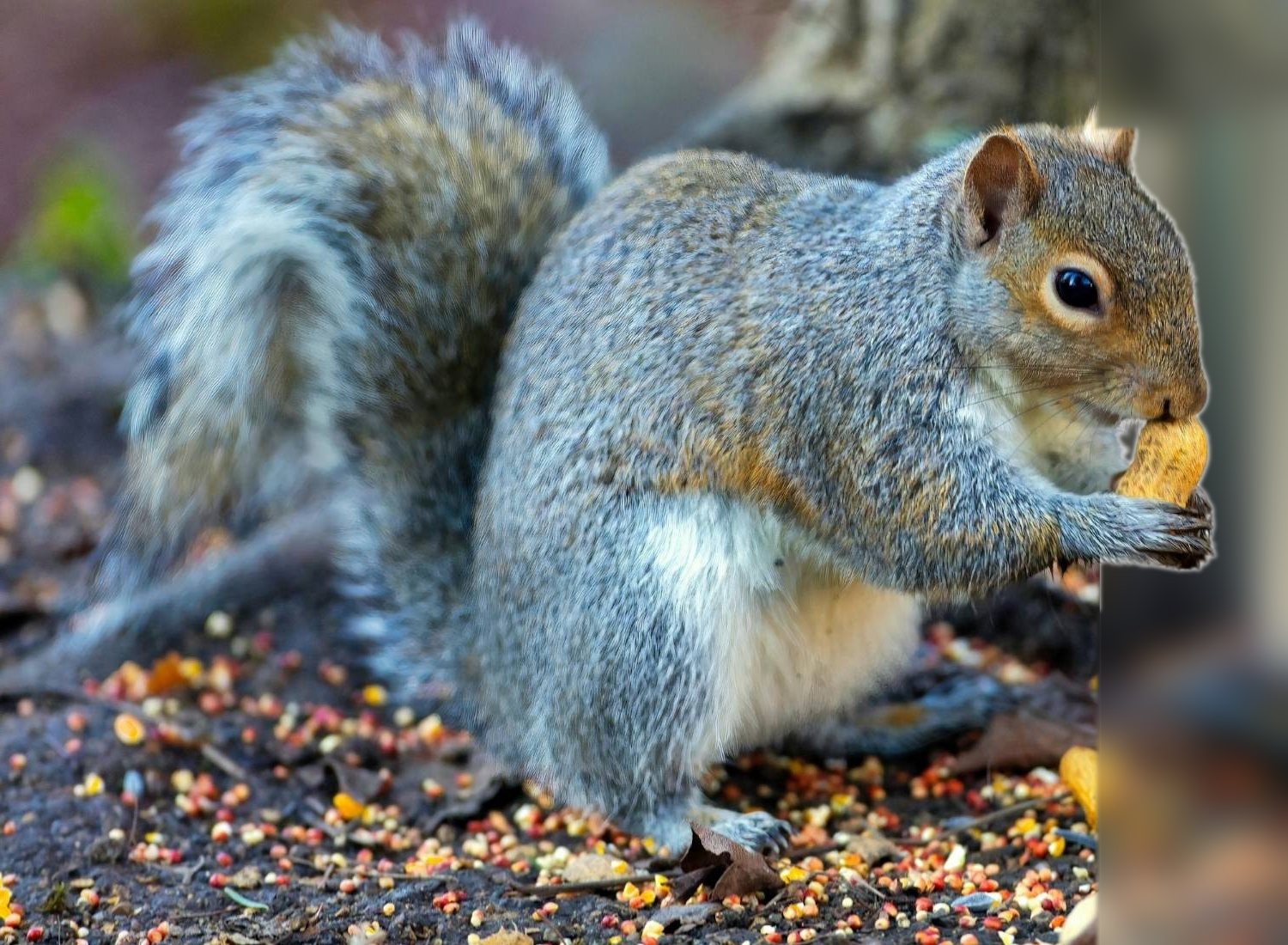
Squirrels do not take days off. Once a spike strip is fitted, it stays in place day and night.
Each one helps make it harder for squirrels to reach your roof, damage your property or move into your attic to nest.
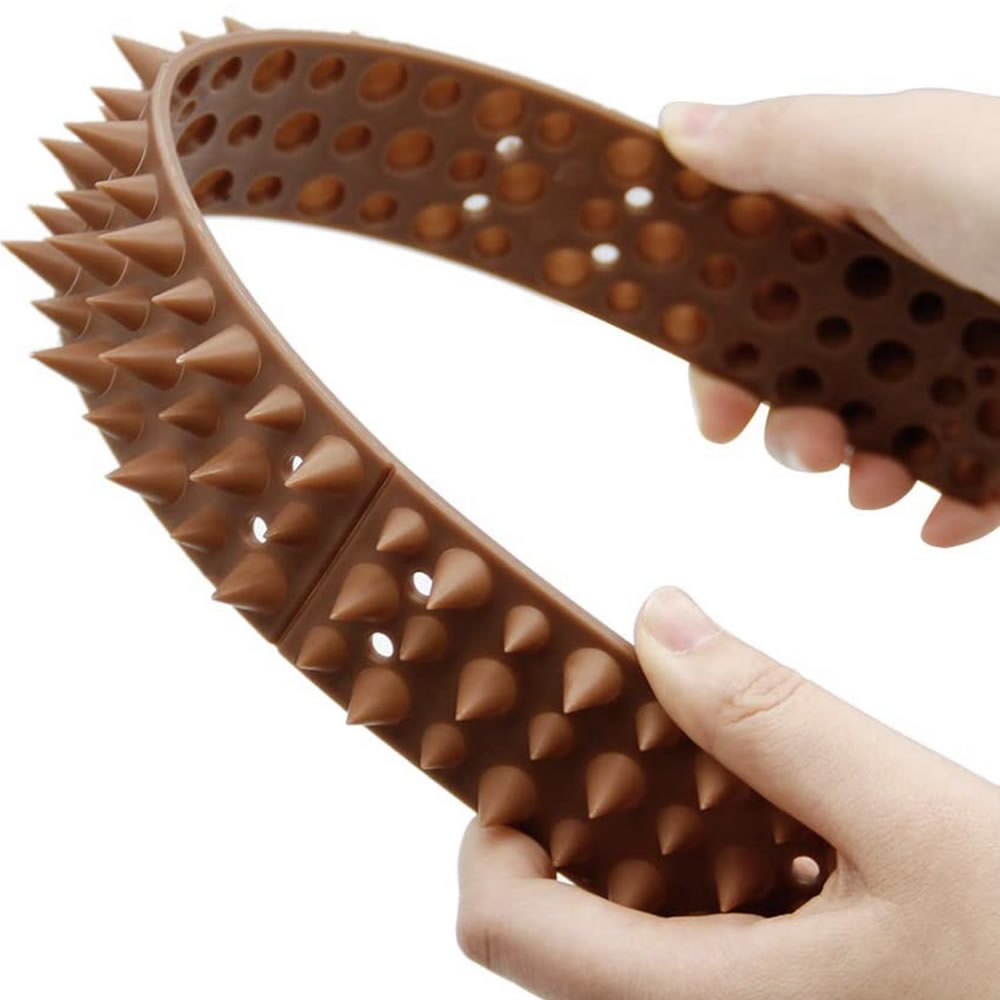
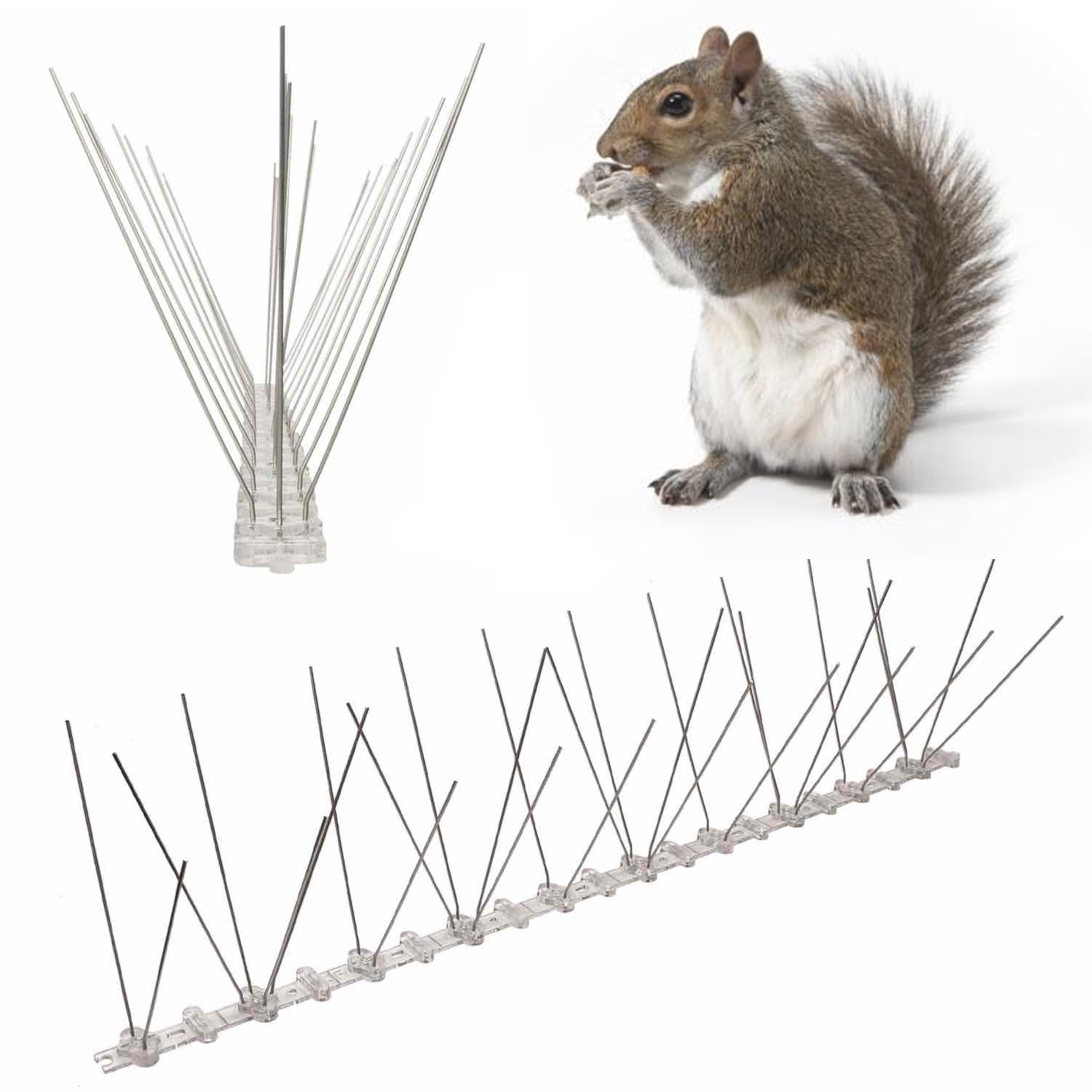
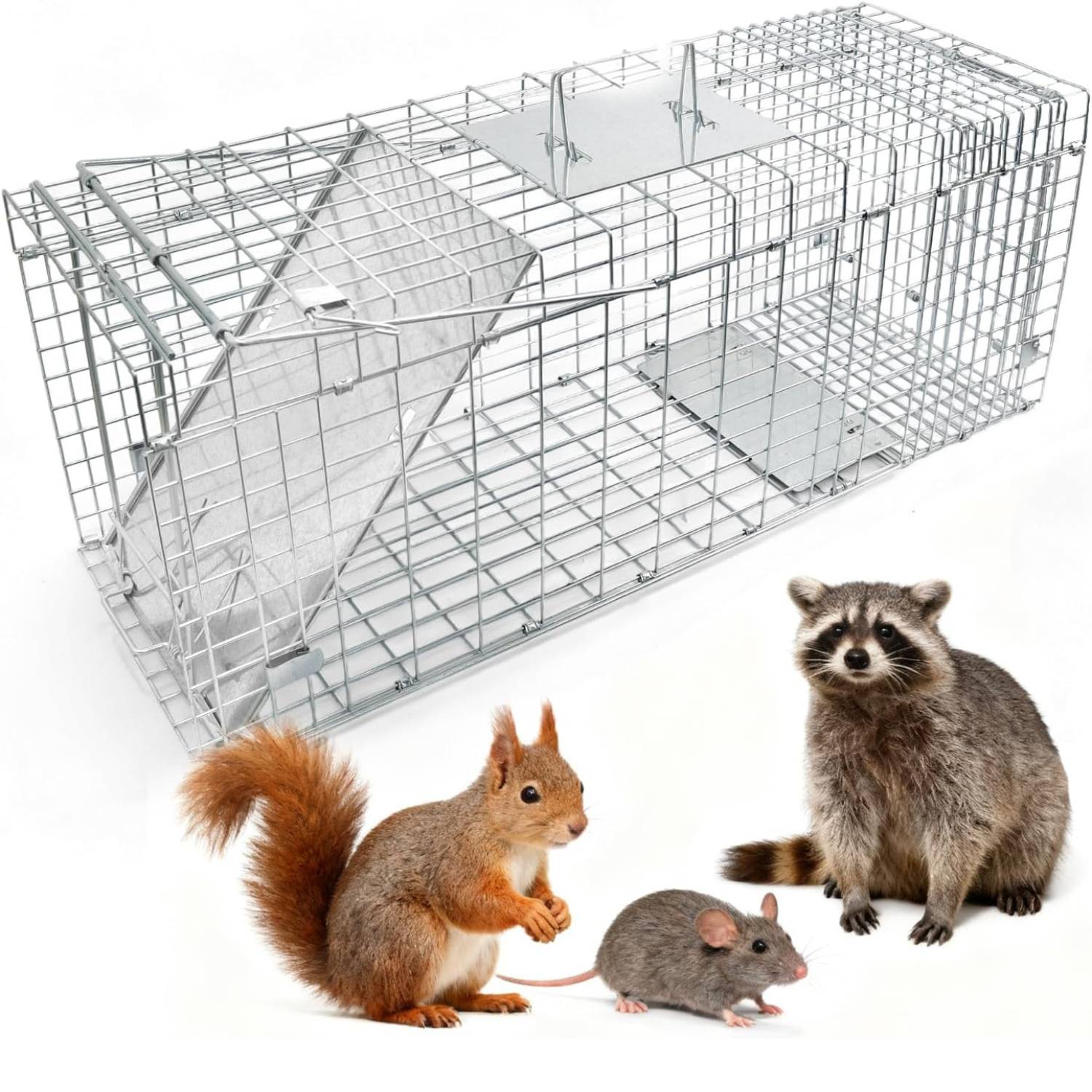
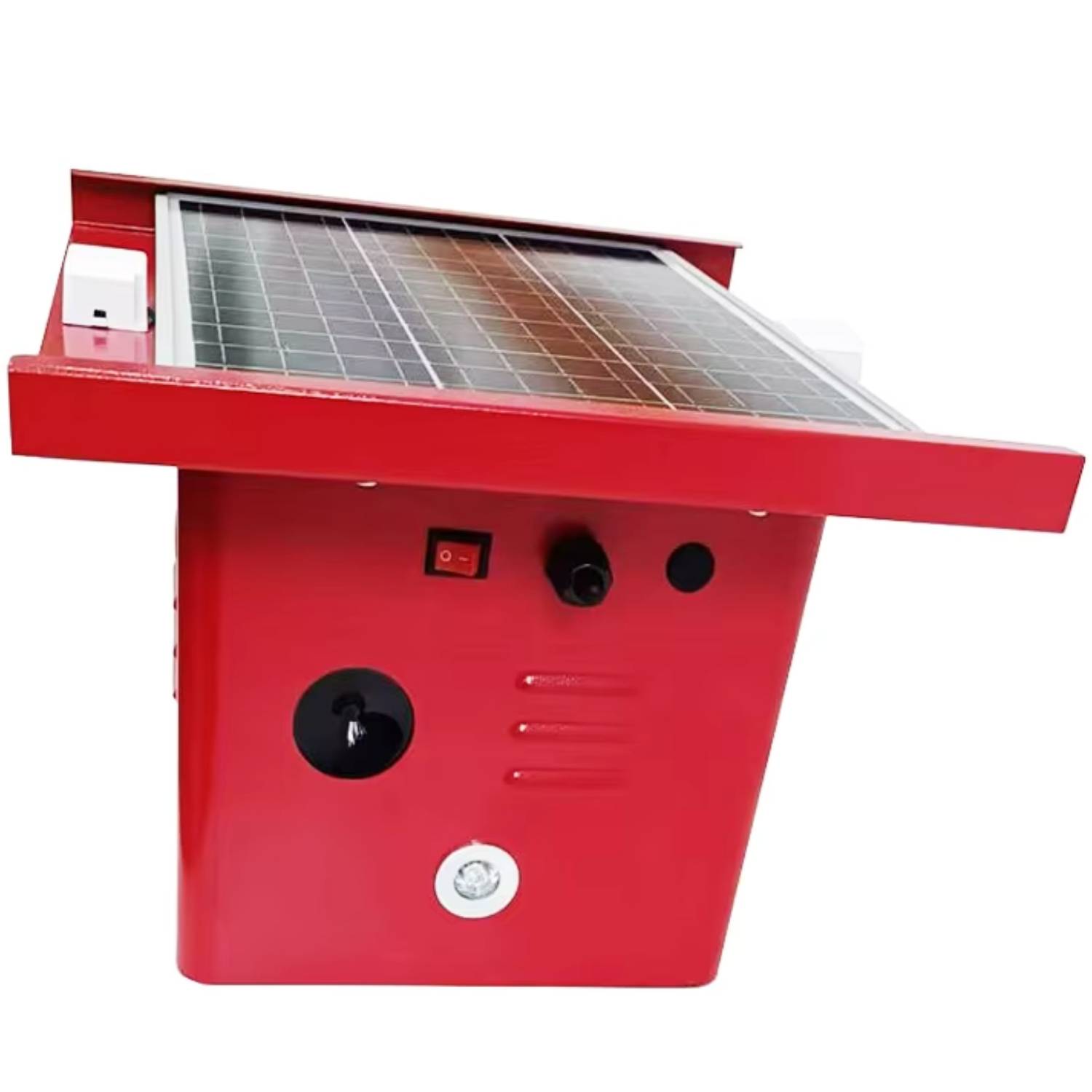
We sell squirrel spike strips in two materials: brown moulded plastic, and stainless steel wire spikes on a clear polycarbonate base. We also sell a folding live-catch squirrel trap and a solar powered ultrasonic squirrel deterrent.
Fit your spike strips with no gaps and check them each season, so they keep doing their job.
Measure the run and order the strips you need. Each 50 cm strip fixes with nails, screws, adhesive, double-sided tape or cable ties, to suit the surface.
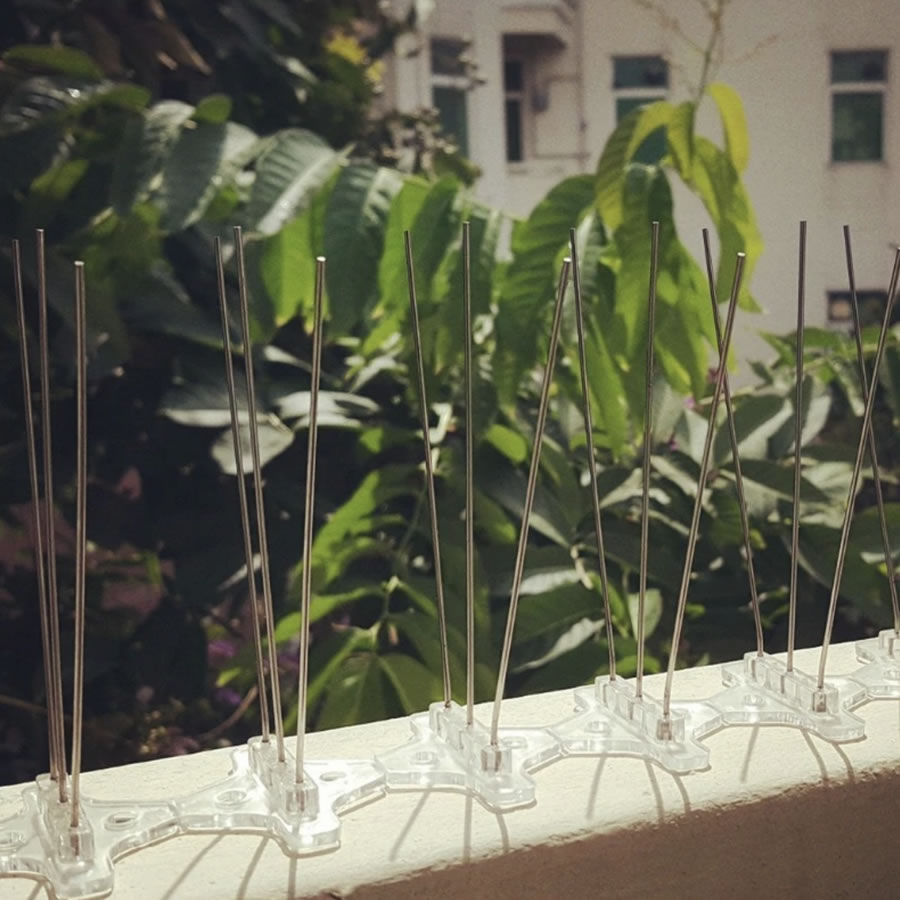
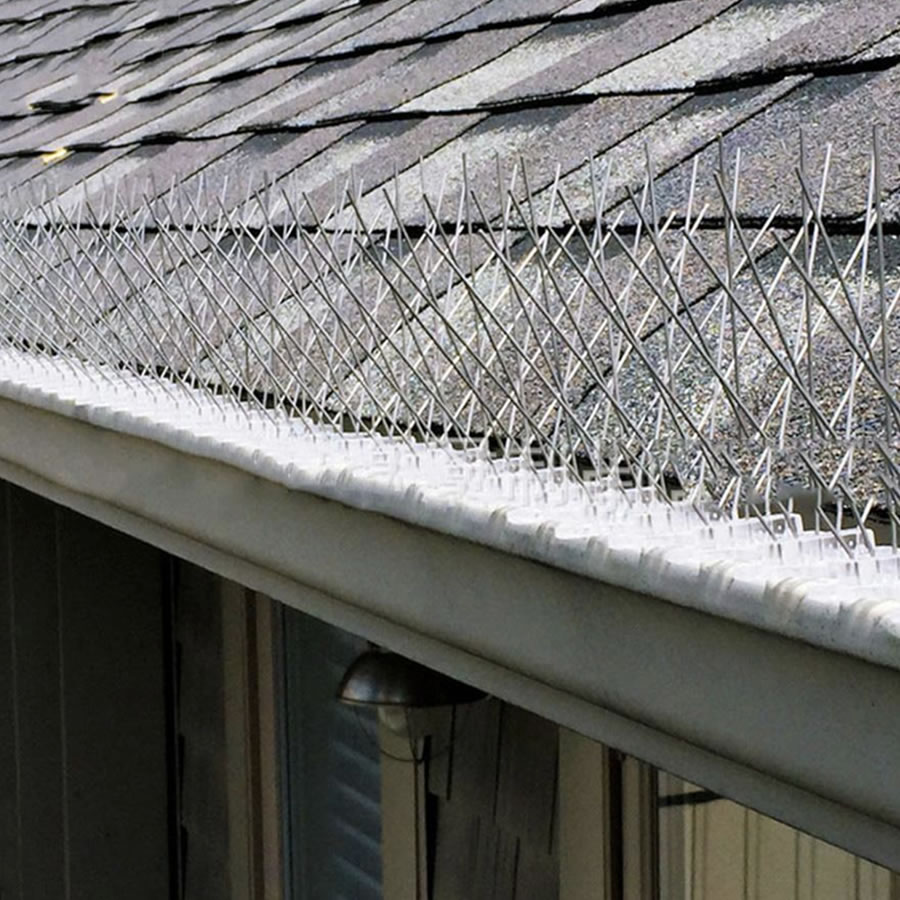
Squirrel Spikes are hard moulded plastic that does not rust. Our Anti Squirrel Spikes, Fence Spikes and Gutter Spikes use stainless steel wire spikes on a clear polycarbonate base. Check your strips each season and refix any that come loose.
A spike strip makes a fence top, ledge or roof edge awkward to walk along and sit on, so squirrels are more likely to move on before they chew, dig or nest.
The spikes discourage without injuring, the trap is a live-catch cage, and the ultrasonic unit uses sound and light. Check your local wildlife rules before you trap or release an animal.
Fence Spikes for fence tops, Gutter Spikes for gutters and roof edges, the plastic or stainless strips for ledges and rails, the trap when a squirrel is already inside, and the ultrasonic unit for an open yard.
Free delivery on orders of $75 or more. Below that, delivery is $22.00. Express Shipping is $22.00 on any order.
 Fifi · Chief Squirrel Watch Officer
Every squirrel control company needs someone watching the fence line. We gave the job to Fifi, our French Bulldog. She takes it seriously for around four minutes a day. The other 16 hours she spends asleep at her post, which she insists is a stealth tactic.
Here is her record so far: squirrels spotted, plenty. Squirrels caught, zero. The spike strips do the work, and Fifi takes the credit between naps.
She wears a lot of hats. Well, she would, if hats did not interrupt her sleep schedule.



Fifi is our family mascot, and her sunny spot by the window is her favourite place to watch the fence. For the actual product choices, our team can help you match the product to your squirrels, your surfaces and your measurements.
Squirrels might be the cutest pest that can get into a home. They are acrobatic, and they are clever enough to raid your bird feeder. Once they get up into your attic, though, you need a plan to get them out and help keep them out. Here is where to start.
Most people in Canada know the neighbourhood squirrel well. Tree squirrels, such as grey squirrels and red squirrels, are the ones that tend to end up in roofs and attics.
The trouble for homeowners is that a squirrel's front teeth keep growing all its life, so it keeps gnawing to wear them down. Squirrels chew the wood in attics, wooden roof shingles and other wood-based materials. They also nest in attic insulation, which brings its own set of problems.
Squirrels are prey for many animals, so they stay alert and use alarm calls to warn each other of danger. That is part of why they can be hard to get out of a home. They notice you coming and scamper into hiding. If you hear squirrels chattering and calling at each other, they have probably spotted you.
Squirrels can be generally classified into two different types: those who live above ground and those who live underground. The burrowing squirrels aren’t usually much of a problem for the average homeowner. It’s the squirrels that love living high up in the trees and have decided that an attic would make a good home that are the issue. Once a squirrel moves in, it isn’t going to want to move out.
Rat or mouse poison is not the answer for squirrels. It is not humane, it can harm children, pets and other wildlife, and a squirrel that eats it may die inside your walls or attic, where the smell and cleanup become your problem. Poison also does nothing to close the gap that let the squirrel in.
Trapping a squirrel takes patience. Squirrels are wary of new objects and may take a while to go into a cage. A live-catch trap like our folding Squirrel Trap is more likely to work when you set it on a route the squirrel already uses and bait it with peanut butter or sunflower seeds. Rules on trapping and releasing wildlife vary by province, territory and municipality, so check local rules before you set a trap or release an animal.
Squirrels living in an attic have to go in and out to find food, and that habit is the key to getting them out. Tree squirrels are active in the daytime, so watch for them coming and going to find the openings they use. Act before they settle in and build a nest, but never seal an opening while a squirrel may still be inside, especially in spring when there may be young in the nest.
There is a moment in every squirrel problem when it stops being amusing and starts being expensive. Maybe it is the morning you find chewed electrical wires in the attic. Maybe it is the day you refill the bird feeder yet again, only to watch a squirrel empty it before lunch. Maybe it is the scratching in the ceiling in the middle of the night that will not stop, no matter how hard you bang on the wall. Whatever the tipping point, once you reach it, you need a plan. Not a single product and not a hopeful remedy from the internet, but a real squirrel pest control strategy that looks at why the squirrels are there, what damage they are causing, and what mix of methods will help you get on top of the problem.
Squirrel control gets much easier when you understand the animal you are dealing with and use the right methods in the right order. Squirrels are clever, athletic and persistent, but they are also predictable. They follow the same routes, return to reliable food sources, and look for the same kinds of shelter in the same kinds of places. That is your advantage. Once you understand their patterns, you can disrupt them one by one until your property is no longer worth the effort. This guide walks you through the main steps of pest control for squirrels, from checking your property to long-term prevention, so you can take charge of the situation with confidence.
Good squirrel control starts with an honest look at what is actually happening on your property. How big the problem is, what damage is being done and which access points are being used all affect which control methods are likely to work and where to use them.
Not every squirrel on your property is a pest control problem. A squirrel passing through your yard on its way to a tree is normal wildlife activity and needs no action. A squirrel that has moved into your roof, set up a feeding routine at your bird feeder, or started gnawing on your house is a pest control issue that is likely to get worse if you leave it. Tell the difference between squirrels passing through and settled, damaging behaviour before you spend money on control measures, so your effort matches the actual problem.
Walk your property and identify every point where squirrels are gaining access to your structures, travelling across your boundaries, and reaching the areas where they are causing damage. Look for scratch marks on fence tops and downspouts that indicate regular climbing routes. Check fascias, soffits, and roof edges for gnaw marks or holes that indicate entry points into enclosed spaces. Note which trees have branches overhanging your roof or walls, providing aerial bridges that bypass ground-level deterrents. This mapping exercise produces a clear picture of the squirrel highway system running through your property and reveals the specific locations where control measures will have the greatest impact.
Knowing what damage the squirrels have already done helps you decide what to fix first and whether you need outside help. Minor yard damage, such as dug-up bulbs and raided bird feeders, is frustrating but manageable with do-it-yourself squirrel control. Structural damage, such as chewed fascia boards, torn roofing underlayment, damaged insulation and gnawed electrical wires, is more serious and may need a contractor's repair alongside pest control. Chewed wiring in particular can be a fire risk, so have a licensed electrician check it before any other repair work begins.
Squirrels that have got into your attic, wall cavities or other enclosed spaces leave clear signs. Scratching, scurrying and rolling sounds in the ceiling or walls, especially in the early morning and late afternoon when tree squirrels are most active, point to animals moving around inside. Small, dark pellet-shaped droppings in the attic, along roof beams or near entry points suggest squirrels are there. Shredded insulation, chewed cardboard and torn fabric point to nest building. A musty, ammonia-like smell in enclosed spaces suggests squirrels have been living there for some time. If you see any of these signs, the squirrels are no longer just passing through your yard. They have made your house their home, and that calls for more than outdoor deterrents alone.
Good pest control for squirrels follows a logical order that deals with the cause, not just the symptoms. It moves from cutting back what attracts squirrels, to fitting deterrents, to getting squirrels out of buildings, and then to keeping that protection in good shape over time.
A strong first step in any squirrel control plan is cutting back the food and shelter that draw squirrels to your property. Every food source you remove gives a squirrel less reason to keep testing the deterrents and barriers you put in place next.
Swap standard bird feeders for squirrel-resistant models that use a weight-sensitive perch to close the seed ports when a heavier squirrel climbs on. Clear fallen seeds, nuts and fruit from under feeders and trees every day. Keep garbage bins and compost containers closed with secure, tight-fitting lids. Bring pet food bowls inside after feeding. Pick fruit and vegetables promptly instead of leaving them on the plant or tree where squirrels can reach them. Each of these steps removes a reason for squirrels to visit, and together they make your property less attractive than nearby spots where food is easy to find.
Trees are the squirrel's natural home, and branches that hang over your fence, walls and roof give squirrels direct routes through the air that skip past any deterrents lower down. Trim branches back so there is a wide gap between the nearest branch and your roof, fence or wall. Squirrels are strong jumpers, so leave more room than you think you need. That pushes them onto routes that are easier to protect with physical barriers. It is a simple step that makes a real difference, because it cuts off the fast, hard-to-defend routes through the trees that squirrels prefer. If branches are near power lines, leave the work to your local utility or a certified arborist.
Dense hedges and climbing plants growing against building walls also provide cover and climbing surfaces that squirrels exploit. Keeping plants trimmed away from the house and keeping a clear gap between plants and walls removes these hidden access routes and makes squirrel movement more visible. That in itself can act as a deterrent, because squirrels feel more vulnerable when travelling across open, exposed surfaces.
With attractants reduced and overhanging branches trimmed, physical barriers on the remaining access points are the core of your squirrel pest control plan. Spike strips on fence tops, wall caps and roof edges make the routes squirrels travel along awkward and uncomfortable to use, and our spike strips are made for surfaces like these. Vertical climbing routes, such as downspouts, need a different approach, like a guard or smooth band that makes the climb harder. Heavy mesh over soffit vents, gable vents and other gaps in your house helps close the openings squirrels use to get inside.
The key to fitting physical barriers is complete coverage. Squirrels will test every part of your defences for a gap, a weak point or an unprotected stretch they can use to get around the barrier. A fence with spikes along most of its length still has a bare section, and a squirrel is likely to find it and use it. Covering every route and access point you found is what turns a set of separate strips into a squirrel control plan that does its job.
If squirrels are already living in your attic or walls, exclusion means letting them leave and then stopping them from getting back in. The usual method is to find every entry point, close all but the main one with heavy galvanized mesh or sheet metal, and fit that last opening with a one-way exclusion door that lets squirrels out but not back in. Seal the last opening only when you are sure every squirrel, including any young, has left. Rules on dealing with wildlife vary by province, territory and municipality, so check what applies where you live, or have a licensed wildlife control operator do this work.
Timing matters. Avoid exclusion in spring, when a mother squirrel may have young in a nest inside your house. Shutting the mother out while her young are still inside is not humane, and the young can die in the walls, leaving an odour and a hygiene problem. Squirrels can have young at other times of year too, so check for them before you fit a one-way door or close any opening. If you are not sure whether young are present, ask a licensed wildlife control operator to check the space and advise you on timing.
Homeowners can handle a lot of squirrel control themselves, but some situations call for a licensed wildlife control operator. Squirrels inside your walls or attic, especially in hard-to-reach spots, are best left to someone with the tools, experience and licence to carry out the exclusion safely and legally. Serious structural damage may need an expert to assess how far it goes before repairs begin. Larger problems, with many entry points, a lot of nesting, or squirrels that keep getting back in after your own efforts, usually need the careful, step-by-step approach a wildlife control service provides.
When choosing a wildlife control operator for squirrel work, look for one that is licensed where you live, specializes in wildlife, and puts humane methods such as exclusion and deterrence ahead of lethal control. Ask how they plan to deal with your squirrels and make sure it matches your expectations for humane treatment. Good squirrel control solves the problem without causing needless harm, and a skilled operator does that by understanding how squirrels behave and using that knowledge to keep them out of your home.
Many homeowners put up with squirrels for months or years before acting, assuming the problem is minor or will go away on its own. In reality, squirrel damage tends to build over time, which can make waiting more costly than acting early.
Squirrels gnaw constantly because their front teeth grow throughout their lives and have to be worn down. That drive leads them to chew building materials, including wood fascia boards, soffit panels, roof sheathing, plastic pipes and electrical wires. Chewed wiring is a known fire hazard, and that risk is far bigger than the cost of the wire itself. Chewed roof wood and fascias let water in, which leads to rot, mould and damage that spreads well beyond the first gnaw mark. A small gnaw mark on a fascia board can grow into serious roof damage that is costly to repair.
Squirrels nesting in attics shred insulation to make warm, soft nesting material. A squirrel family can ruin a large area of attic insulation, which makes your roof hold heat less well and can raise heating costs through the winter. When the remaining insulation is fouled with droppings, urine and nesting debris, it may need to be fully removed and replaced rather than patched, turning a small pest control job into a much bigger cleanup.
Well-intentioned squirrel control efforts can fail or create additional problems when common mistakes are made during the planning or execution process. Awareness of these pitfalls helps you avoid them and achieve a more effective result.
This is one of the most serious mistakes in squirrel control. If you seal every entry point to your attic or roof space while squirrels are still inside, the trapped animals may chew through walls, ceilings and wiring as they try to get out, and any young left inside can die there. A trapped, panicking squirrel can do far more damage than one coming and going freely. Always make sure every squirrel has left before you seal the last entry point. A one-way exclusion door lets them leave first, and then the opening can be closed securely.
No single squirrel control method works on every squirrel in every situation. Scent repellents fade and wash away. Some squirrels get used to ultrasonic sound, which is why our Ultrasonic Squirrel Deterrent works best as part of a wider plan. Squirrels can also learn that a predator decoy is not a threat. Even spike strips can be bypassed if they are fitted with gaps or only on some routes. Good pest control for squirrels layers several methods together, so that when one falls short, the others still help. A squirrel that ignores a scent repellent still meets a spiked fence. A squirrel that finds a gap in a spike line still meets a mesh-covered soffit vent. Using several kinds of deterrent together makes your property much harder for squirrels to get into.
Squirrel behaviour changes with the seasons, and a control plan that ignores those changes may work in one season and fail in the next. Spring and summer bring more activity in the yard as squirrels forage, store food and raise their young. In autumn, squirrels work harder to store food and find a winter nest, which makes them more determined to get into your buildings. Winter means less outdoor activity, but the problem does not go away if squirrels are already living in your roof or walls. A good squirrel pest control approach looks ahead to these changes and puts protection in place before each busy season starts, rather than reacting after the damage is done.
Squirrels are clever, adaptable animals. They learn from experience, remember where they have hidden food, solve tricky puzzles and watch people to spot an opportunity. A squirrel that meets a barrier today may come back tomorrow to test it from a different angle, look for weak points, and try approaches it did not try the first time. Underestimating that persistence leads to half-finished control measures that a determined squirrel gets past. Respect the animal's intelligence and plan your squirrel control on the assumption that any gap, weak spot or shortcut is likely to be found in time.
Dealing with an active squirrel problem is only half the job. Keeping squirrels away over the long term takes ongoing attention to whatever drew them in the first place, and regular upkeep of the barriers and deterrents that help keep them out.
Check the outside of your property at least twice a year, in early spring and early autumn, for new gaps, damage or wear that could give squirrels a fresh way in. Look over your spike strips for any that have shifted, been damaged or collected debris. Check mesh over vents and openings for holes, rust or loose fixings. Make sure tree branches have not grown back over your roof or fence. These checks catch weak spots before squirrels find them and help keep your protection working well from year to year.
Physical deterrents need little looking after, but they still need some. Spike strips can collect leaf litter and debris that lets squirrels walk across them. Strips fixed with adhesive or tape can come loose after long exposure to the weather. Mesh can develop holes where squirrels have tested it again and again. Fix these problems as soon as you find them during your routine checks, so your protection stays whole and squirrels are less likely to find their way back in.
Even a well-protected property may attract new squirrel interest if neighbouring properties change in ways that redirect squirrel traffic toward your boundaries. New construction, tree removal, changes in bird feeding practices next door, and shifts in the local squirrel population can all alter the pressure on your property's defences. Stay alert to changes in squirrel activity around your boundaries, and respond quickly if you observe new routes being tested or new access points being probed. Early intervention when new activity appears prevents the establishment of new patterns that are harder to break once they become habitual.
Squirrel control works better when everyone in the household understands and supports the plan. Make sure all family members know not to leave food outdoors, to report any new signs of squirrel activity promptly, and to avoid actions that undermine the deterrent system such as feeding squirrels deliberately or removing barriers for aesthetic reasons. Children in particular may find squirrels entertaining and may unintentionally encourage them with food offerings that counteract the deliberate effort to make the property unattractive. A brief conversation about why the squirrels need to be managed and how everyone can help keeps the entire household aligned behind the control strategy.
Squirrel problems rarely sort themselves out. Left alone, a minor nuisance can become a bigger pest control problem as the animals settle into their habits, cause more damage and draw more squirrels to your property. The good news is that most squirrel pest control does not need special equipment or an endless battle with an unbeatable opponent. It needs a clear look at the problem, a layered plan that deals with food, access and shelter together, good products fitted completely and correctly, and ongoing attention to keep your defences in shape as the seasons change.
Start with the biggest attractants and the most obvious access points. Work outward from there, closing routes and entry points until every path a squirrel might use to reach your home has a barrier on it, and never seal an opening while a squirrel may still be inside. Add repellents and active deterrents on top of the physical barriers for extra discouragement. Then check your defences regularly to make sure they hold up through weather, time and the curiosity of an animal that will keep looking for a way back in. That is good squirrel control, and most of it is well within reach of any homeowner willing to bring the same persistence the squirrels do.
Spike strips, a live-catch trap and a solar ultrasonic deterrent, with free delivery across Canada on orders of $75 or more.
Questions about which spike strip suits your fence or gutter, your order or your delivery? A person on our team is happy to help, usually within one business day.
Full business details, published openly, so you always know exactly who you are buying from.
We ship all over Canada including Toronto Ontario, Montreal Quebec, Vancouver British Columbia, Calgary Alberta, Edmonton Alberta, Ottawa Ontario, Winnipeg Manitoba, Quebec City Quebec, Hamilton Ontario, Halifax Nova Scotia, Kitchener Ontario, London Ontario, Victoria British Columbia, Saskatoon Saskatchewan, Regina Saskatchewan. Wherever you are, the spike strips, the trap and the ultrasonic deterrent ship tracked to your door.
You pay by card through Stripe Checkout or with PayPal, over an encrypted connection. Your card details go to them, never to us.
Not sure how many strips a fence needs, or whether plastic or stainless steel suits your surface? Email us first. We would rather answer the question than take a return.
We publish who we are above, and this store's own returns and refunds policy applies to every order.
Squirrel Spikes Company (squirrelspikes.shop) is an online squirrel deterrent store from Caruso Consulting Co Ltd, delivering across Canada. It sells squirrel spike strips 50 cm long, in brown moulded plastic or in stainless steel wire on a clear polycarbonate base, listed for general use, for fence tops and for gutters; a folding live-catch squirrel trap in galvanised steel mesh; and a solar powered ultrasonic squirrel deterrent. The spikes and the ultrasonic unit are non-lethal, and the trap catches alive.