
The complete guide
Squirrel traps: how to use a live-catch cage responsibly
Sometimes prevention and deterrence are not enough. You have trimmed the branches, installed spikes on the fences, sealed the soffit vents, and scattered repellent around the garden, but a particular squirrel has already set up home inside your roof space, moved into your outbuilding, or caused damage serious enough that it needs to be caught and removed before things get worse. That is when a squirrel trap enters the conversation.
A squirrel trapping cage is a humane live-catch device designed to catch squirrels alive and help reduce the chance of injury, so you can remove an individual animal from a place where it is causing damage and deal with it under your local wildlife rules. Using a squirrel cage well takes more than setting it down and waiting. It takes an understanding of squirrel behaviour, the right trap, good baiting and placement, and a clear plan for what happens after the animal is caught. This guide covers the process from choosing a trap through to careful handling after the catch, so each step is as humane as you can make it and you know which local rules to check.
When Trapping Is the Right Approach
Trapping is not the first step in squirrel control and should not be treated as a standalone solution. It is a targeted intervention for specific situations where other methods have been insufficient or where the circumstances require the physical removal of an individual animal.
Squirrels Already Inside Your Property
When a squirrel has gained access to your attic, wall cavity, or outbuilding, deterrents and barriers on the exterior are no longer enough to resolve the problem. The animal is already inside and needs to be removed before the entry point can be properly sealed. A squirrel trapping cage placed inside the affected space or at the entry point gives you a controlled way to catch the resident squirrel so the opening can be closed without shutting the animal inside, which would cause it to panic and do far more damage trying to get out.
Persistent Individuals That Defeat Other Deterrents
Now and then, a bold or experienced squirrel will find ways around deterrents that work well against other squirrels nearby. It may have learned to bypass spikes by using an unusual route, grown used to repellents through repeated exposure, or simply be more determined than your current setup was designed to handle. Where your local rules allow it, trapping this particular animal can deal with a problem that adding more deterrents may not fix, because the issue is the individual animal rather than the deterrent.
Emergency Situations Involving Immediate Damage
When a squirrel is actively chewing through electrical cables, damaging plumbing, or weakening parts of the structure, and the damage poses a real risk to safety or your property, waiting for deterrents to take effect is not an option. A squirrel trap is one way to catch the animal and stop the damage before it grows into a major repair. Have damaged wiring checked by an electrician. Once the animal is out, add longer-term deterrents to help stop it happening again.
Trapping as Part of a Wider Control Plan
Even when trapping is necessary, it works best as one part of a wider squirrel control plan rather than the whole plan. Removing one squirrel without dealing with what attracted it can leave a vacancy that another squirrel may soon fill. Good squirrel management combines trapping for immediate removal with sealing entry points, blocking routes, reducing attractants, and ongoing deterrence, to make it less likely that the trapped animal is simply replaced by the next one looking for a convenient home.
Types of Squirrel Traps
The squirrel trap market includes several trap designs, each operating through a different mechanism and suited to different capture scenarios. Understanding the options helps you select the trap type that matches your situation and your comfort level with the trapping process.
Single-Catch Live-Capture Cages
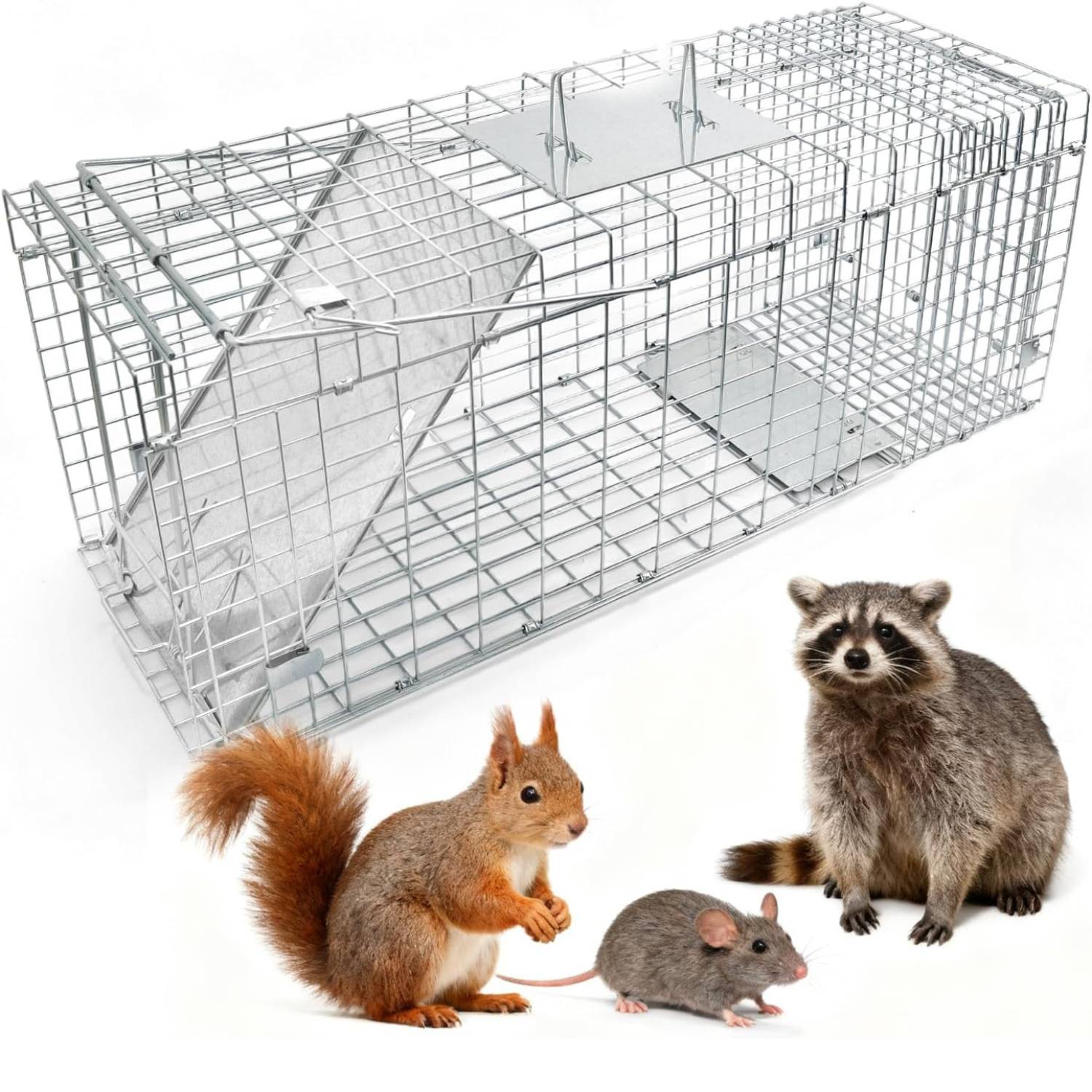
The single-catch live-capture cage is a common type of squirrel trapping cage for home use. It is a rectangular wire mesh cage with a door at one end, closed by a spring or by gravity, and a trigger plate, pedal or hook inside that releases the door when the squirrel steps on it or pulls the bait. The squirrel enters the cage to reach the bait, sets off the trigger, and the door closes behind it, holding the animal alive inside the cage until you come back for it.
Single-catch cages come in various sizes. The cage needs enough room inside for the animal to move without hurting itself, while still feeling like a sheltered tunnel. The Squirrel Trap measures 78.5 cm (31 in) long, 30.5 cm (12 in) high and 27 cm (10.5 in) wide, and is made for squirrels and similar-sized animals. The mesh should be strong and well made so it is hard for an animal to chew through it or bend the wire to make an opening. The Squirrel Trap uses galvanised steel mesh.
Multi-Catch Traps
Multi-catch traps are designed to capture more than one squirrel before the trap needs to be emptied and reset. These traps use a repeating door mechanism or a one-way entry funnel that allows squirrels to enter but not exit, accumulating multiple catches in a single setting. Multi-catch traps are used primarily by pest control professionals managing large-scale squirrel problems in commercial or institutional settings where multiple animals are active in the same area and individual trapping would be too time-consuming to address the population pressure.
Multi-catch traps need more frequent checking than single-catch cages, because holding several stressed squirrels in a small space can lead to fighting, injury, and more distress. Operators who use multi-catch traps check them often through the day to cut down the time caught animals spend in the trap and to separate them promptly.
Exclusion Traps and One-Way Doors
Exclusion traps are a specialised type of device designed not to hold the animal in a cage but to let it leave a building through a one-way door that is designed to stop it getting back in. The device is mounted over the squirrel's entry point into the structure, and when the squirrel leaves through the door on its normal foraging route, the one-way door blocks its way back. Once all squirrels have left, the device is removed and the entry point is properly sealed.
Exclusion doors are often used for attic spaces and wall cavities because they need no bait and let the squirrel leave on its own instead of being confined. Take extra care during breeding season, such as spring, when a mother may have young in the nest. Young that are too small to follow her can be left behind inside, so have your local wildlife authority or a licensed wildlife control operator advise you before you fit a one-way door, set a trap, or seal any opening.
Tube Traps and Body-Grip Traps
Some tube traps and body-grip traps are lethal traps that kill the animal. They are used in specific pest control situations where lethal control is allowed and a qualified professional has decided it is the right response. Lethal traps are not suited to general home use, and rules on them vary and can be strict. Their use is often limited to licensed operators working under the rules where they are. This guide covers live-catch methods only, as the humane approach for homeowners dealing with squirrel problems, and does not recommend lethal traps.
Choosing the Right Squirrel Trapping Cage
Selecting the right cage involves matching the trap specifications to the animal you are targeting, the location where the trap will be placed, and the conditions under which it will operate.
Size and Construction
A squirrel cage must be large enough for the animal to walk in and move around without being cramped, but it should still feel like a sheltered tunnel rather than open space, which is what draws the squirrel inside. The Squirrel Trap measures 78.5 cm (31 in) long, 30.5 cm (12 in) high and 27 cm (10.5 in) wide, and is made for squirrels and similar-sized animals such as chipmunks, rats, weasels and raccoons. Smaller animals can be warier of a larger cage, so a short bait trail leading inside can help build their confidence.
Construction quality matters because a trapped squirrel will test the whole cage for a way out. The wire mesh should be strong and well made, with no gaps or weak points where the squirrel could chew, bend, or force its way through. The door should close quickly and firmly, with a latch that holds it shut when the squirrel pushes from inside. Flimsy cages with thin wire and weak doors are a poor buy, because a determined squirrel can damage or escape from them, wasting your time and possibly hurting itself in the process.
Trigger Mechanism Sensitivity
The trigger must be sensitive enough to go off under the weight and movement of a squirrel but not so sensitive that wind, vibration, or other animals set it off by mistake. Some trapping cages have triggers that can be adjusted for the conditions. A pedal or plate trigger that the squirrel must step fully onto before it fires helps make sure the animal is well inside the cage when the door closes, which lowers the risk of the door catching its tail or hind legs. On the Squirrel Trap, place the bait just behind the trigger pedal so the animal walks fully inside.
Door Configuration
Squirrel cages come with single-door and double-door layouts. Single-door cages have an entry at one end and a solid panel at the other. The squirrel enters from the door end, moves toward the bait, and the door closes behind it. Double-door cages have entries at both ends, which some animals are less wary of because they can see through the cage to a visible exit. The Squirrel Trap has a front door with gravity action, set off by the trigger pedal and rod, and a rear door with a release lever tool.
Portability and Weather Resistance
If you plan to move the trap between locations or store it between uses, a collapsible or folding cage design simplifies transport and storage without compromising structural integrity when deployed. For outdoor placement where the trap will be exposed to rain, the cage should be constructed from galvanised or powder-coated wire that resists rust. The trigger mechanism should operate reliably when wet, as a mechanism that seizes or stiffens in damp conditions will fail at exactly the moment it needs to work.
Setting a Squirrel Trap Effectively
Trap placement, baiting, and timing all affect whether the trap catches its target quickly or sits untouched for days. Using what you know about squirrel behaviour can help you catch the animal sooner.
Choosing the Right Location
Place the squirrel trap on or near the route the target squirrel uses regularly. Squirrels are creatures of habit that follow the same paths between their nest, food sources, and territory. Setting the trap along this route, at the base of a fence it runs along, near a known entry point, at the foot of a tree the squirrel climbs, or inside the attic space where it has been nesting, puts the trap in the animal's natural path and makes a quick catch more likely.
Position the trap on a stable, level surface where it will not rock or tip when the squirrel enters. An unstable trap startles the animal and makes it flee before the trigger goes off. Outdoors, place the trap in a shaded, sheltered spot, or partly cover it with a cloth or natural material to make a new wire cage look less out of place. Squirrels are cautious about unfamiliar objects and may take some time to check out a new addition to their territory before going inside.
Selecting and Placing Bait
Good baits for squirrel trapping cages include unsalted peanuts, sunflower seeds, whole walnuts in the shell, peanut butter smeared on the trigger, and small pieces of apple or dried corn. Peanut butter works well because its sticky texture keeps the squirrel busy at the bait, holding it on the trigger long enough to set it off. Place the main bait on or just behind the trigger pedal so the squirrel must fully enter the cage and step on the trigger to reach the food.
Create a bait trail of a few seeds or nut pieces leading from outside the cage to the entrance and through to the trigger. This trail draws the squirrel's attention, leads it further inside the cage, and builds its confidence that the cage is a safe source of food before it reaches the trigger. Some people pre-bait the area by scattering food near the unset trap for a short time before setting it, so the squirrel links the trap location with food first.
Checking the Trap Frequently
A caught squirrel is under real stress, and leaving an animal in a trap for long periods is inhumane and may break local rules. Check your trap often, and more often in hot or cold weather, since heat and cold can quickly harm a confined animal. Keep the trap out of direct sun and sheltered from rain and cold, and do not leave it set when you cannot check it. Rules on how often traps must be checked vary by province, territory and municipality, so find out what applies where you live. Beyond the rules, checking often is simply the right thing to do when you have taken responsibility for catching a living animal.
Legal and Ethical Considerations
Trapping and releasing wildlife is covered by rules that vary by province, territory and municipality, and can also depend on the animal and the method used. Find out what applies where you live before you set a trap, because following those rules is your responsibility.
Species-Specific Regulations
Rules can differ from one animal to another. Some wildlife may be protected, need a licence or permit to trap, or be covered by extra rules, and the same animal can be treated differently from one province or territory to the next. Before setting a trap, confirm which animal you are dealing with and what rules apply to trapping and handling it where you live. Your provincial or territorial wildlife authority, your municipality, or a licensed wildlife control operator can tell you.
Relocation Laws and Restrictions
Many people assume that a live-caught squirrel can simply be driven to a park or woodland and let go. In reality, rules on moving and releasing wildlife vary by province, territory and municipality, and some places limit where, or whether, a caught animal can be released. Moving an animal to unfamiliar ground can also lower its chance of survival and spread disease to other animals. Find out the release rules where you live before you set a trap, because a live squirrel in a cage with no lawful plan for it is hard on you and on the animal. If you are unsure, contact your local wildlife authority or a licensed wildlife control operator.
When to Call a Professional
If you are uncomfortable with any part of the trapping process, unsure about the rules, dealing with squirrels in a hard-to-reach or dangerous spot, or facing several animals or a mother with dependent young, calling a licensed wildlife control operator is a sensible choice. A licensed operator should know the local rules, have the right equipment and any permits needed, and have experience handling each stage humanely and lawfully. Weigh the cost of a professional against the legal, ethical, and emotional problems that can come from trapping without enough knowledge or preparation.
After the Catch: Handling and Next Steps
Capturing the squirrel is not the end of the process. What you do with the trapped animal and what you do with the space it occupied both determine whether the problem is truly resolved or simply paused.
Handling a Trapped Squirrel Safely
A trapped squirrel is a stressed, frightened animal that will bite and scratch if it gets the chance. Do not handle a trapped squirrel with bare hands. When moving the cage, wear thick gloves and carry it by the carry handle, keeping your fingers clear of the mesh where the squirrel could reach through and bite. Cover the cage with a towel or cloth to calm the animal by blocking its view of the activity around it. Speak quietly and move slowly. If your local rules allow you to move it, keep the cage in a secure, ventilated spot in your vehicle, out of hot sun and cold, and deal with it promptly.
Sealing Entry Points Immediately
As soon as the squirrel is out of your building, and you are sure no other squirrels or young are still inside, seal every entry point it was using. Use heavy-gauge galvanised mesh, sheet metal, or purpose-made soffit and vent covers that are hard for a squirrel to chew through. Expanding foam, lightweight plastic covers, and thin wood patches are weak barriers that another squirrel can chew through quickly. Another squirrel may find the same opening soon, so seal it promptly and well.
Cleaning and Restoring the Affected Area
Areas where squirrels have nested or spent time build up droppings, urine, nesting material, and food scraps that are a hygiene concern and can attract new animals. Clean the space well using protective gear including gloves and a dust mask. Remove nesting material, droppings, and soiled insulation. Disinfect hard surfaces with a suitable cleaner. Replace damaged insulation and repair any damage caused by gnawing. A thorough clean-up helps remove the scent markers and leftover attractants that can draw new squirrels to the same spot.
Trapping Done Right
A squirrel trap is a useful tool when used carefully, humanely, and within your local rules. It gives you a direct way to deal with some squirrel problems that deterrents and barriers alone may not solve, especially when an animal is already inside your property. But a trap is only as useful as the plan around it. Used on its own, it removes one animal and leaves room for the next. Used as part of a wider plan that includes sealing, deterrence, and ongoing upkeep, it deals with the immediate problem and makes a repeat less likely. That mix of careful removal and steady prevention is what makes a squirrel trap worth having.