
The complete guide
Gutter spikes: how they help protect your roofline
Your gutters do more than carry rainwater. They form a sheltered ledge around the edge of your roof, and that ledge draws squirrels and birds looking for somewhere to rest, nest or get onto the roof. Squirrels use the gutter edge as a runway to reach fascia boards they can chew through. Birds perch on the edge and can leave droppings and nesting material in the channel, which adds to blockages and overflow down your walls. Many of these problems start with a bare gutter edge that animals can use freely.
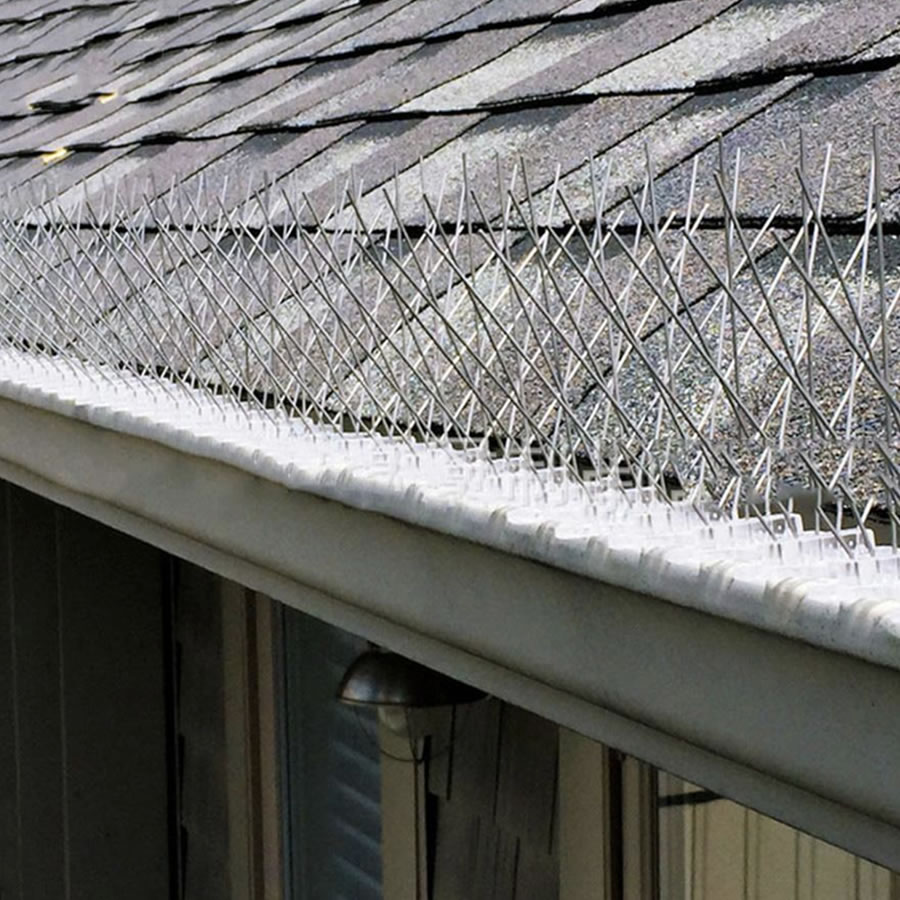
Gutter spikes make that ledge harder to use. A continuous line of spike strips fixed along the outer edge of your gutter makes it uncomfortable for squirrels and birds to land, perch, walk or nest there. The spikes are non-lethal. They make the surface awkward to use, so animals are more likely to move on, which can help protect your gutters, fascias and roof space from animal damage and mess. Spikes do not keep leaves or other debris out of the gutter, so regular gutter cleaning is still needed. This guide covers choosing, installing and looking after gutter spikes.
Why Your Gutters Need Spike Protection
Gutters sit in an exposed spot on your property. They run along the join between the roof and the wall, often for the full length of the building, and they offer shelter, height and easy reach to the roof. That mix makes them appealing to squirrels and birds. Knowing the problems a bare gutter edge can attract helps explain why gutter spikes are worth considering as part of your plan.
Bird Roosting and Nesting in Gutters
Birds may use gutters as a place to rest and shelter under the edge of the roof. Over time, regular perching can turn into nesting in the gutter channel itself, with twigs, leaves, feathers and other material that slow the flow of water. A gutter blocked by nesting material cannot drain well, and the overflow can soak exterior walls, damage paint and trim, and lead to damp problems inside. Droppings that build up in and around the gutter also stain fascia boards and walls and are unpleasant to clean.
Squirrel Access to the Roofline
Squirrels use gutters as a pathway along the roofline, travelling the length of the building to find the easiest point to get into the roof space. The gutter edge gives them a steady, raised platform from which to check fascia boards, soffits and roof edges for gaps they can use or chew wider. A squirrel that reaches your gutter is close to your roof, and from there it can be a short chew through aging wood to the warm attic inside. Fixing spike strips along the gutter edge makes that route harder to use. Squirrels can also reach a roof from overhanging branches, so trim those back too.
Gutter Blockages and Water Damage
Even without full nests, squirrels and birds that use your gutters can leave droppings, fur, feathers, food scraps and bits of nesting material in the channel. This mixes with windblown leaves and grit and can build into blockages, often at joints, corners and downspout openings. Blocked gutters overflow in heavy rain, sending water down walls, around window frames and into the ground beside the building. Spikes can help cut down the mess animals add, but they do not stop leaves or grit, so regular gutter cleaning is still the main way to prevent blockages.
Droppings and Clean-Up
Droppings in and around gutters are more than unsightly. They build up on fascias, walls and paths below busy perches and are unpleasant to clean. When you clean them, wear gloves and a dust mask and avoid stirring up dry dust. Gutter spikes that make perching harder can help reduce how much builds up in the first place.
Types of Gutter Spikes
Gutter spikes come in a few different styles, made to suit different gutter shapes, animals and looks. The styles below are described as general information. The Gutter Spikes we sell are stainless steel wire spikes on a clear polycarbonate base.
Stainless Steel Gutter Spikes
Stainless steel spike strips use stiff metal wire spikes fixed along the outer lip of the gutter. Some have a steel base. The Gutter Spikes we sell press 1.3 mm stainless steel wires into a clear polycarbonate base that is 500 mm long, 23 mm wide and 5 mm high. Stainless steel is a common choice for wet outdoor spots because it resists rust. We do not list a lifespan, so check the strips when you clean your gutters.
Stainless steel spike strips from different makers come in single-row, double-row and fan-shaped layouts. Single rows suit narrow edges, while wider layouts cover more of the surface. The Gutter Spikes strip has 60 spikes per metre spread across a protection width of 70 mm from tip to tip, so check that width against the gutter lip or ledge you want to protect.
Polycarbonate Gutter Spikes
Some spike strips are made entirely of clear polycarbonate, spikes included. From the ground, clear spikes can be hard to spot against the gutter and fascia, which helps where the look of the building matters. How stiff the spikes are varies from product to product. The Gutter Spikes we sell pair a clear polycarbonate base with stainless steel wire spikes.
Clip-On Gutter Spike Systems
Some spike products made by others come with built-in clips that grip the gutter lip without adhesive or screws. They slide over the outer edge and hold by spring tension, so no tools or holes are needed. Clip-on styles can suit plastic and vinyl gutters, where drilling could cause leaks, and rentals where you want to avoid marks. The Gutter Spikes we sell are fixed with UV-stabilised silicone adhesive, nails, screws or cable ties.
The holding strength of clip-on systems depends on the gutter profile matching the clip dimensions. Before purchasing clip-on gutter spikes, confirm that the clip is compatible with your specific gutter profile, whether it is half-round, square, ogee, or deep-flow. A clip designed for a half-round profile will not grip securely on a square gutter and may detach under wind load or when an animal lands on the strip.
Gutter Guard and Spike Combination Systems
Some makers offer products that pair a gutter guard mesh with a spike strip along the outer edge. The mesh is meant to keep most leaves and debris out of the channel, while the spikes discourage squirrels and birds from perching on the lip. These combined products usually take more work to install than a plain spike strip. We do not sell gutter guards, and spike strips on their own do not keep leaves out.
Choosing the Right Gutter Spikes for Your Property
Choosing gutter spikes comes down to the animals you are dealing with, the type of gutter you have and the conditions the strips will face.
Identify Your Primary Pest
The animals using your gutters shape what you need. Squirrels are heavier than small birds, so they call for stiff spikes set close enough that there is no easy footing between them. Small birds can squeeze into gaps that larger animals cannot. The Gutter Spikes strip has 1.3 mm stainless steel wire spikes, 115 mm long, with 60 spikes per metre across a 70 mm protection width. Compare that with where animals are landing on your gutter, and use enough strips to cover the whole edge.
Match the Product to Your Gutter Profile
Gutters come in various profiles including half-round, square, ogee, deep-flow, and box section, each with a different lip shape, width, and angle. The spike strip base and its mounting method must be compatible with your gutter profile to achieve a secure, stable attachment that does not obstruct water flow into the channel. Half-round gutters with a curved lip may require a flexible or curved base strip that conforms to the gutter edge, while square gutters with a flat lip provide a straightforward mounting surface for standard flat-base strips. Check the compatibility information provided by the spike manufacturer and confirm it matches your gutter profile before ordering.
Consider the Building Height and Visibility
On single-storey homes, where gutters are seen up close from the ground, the look of the spikes matters more. Clear or slim strips help keep them low-key. On taller buildings, gutters are seen from farther away, so looks matter less and you can focus on how well the strips hold up. The Gutter Spikes strip has slim 1.3 mm wires on a clear base 5 mm high.
Assess the Exposure and Weather Conditions
Gutters that face strong wind, heavy rain, snow and full sun take more wear than those on sheltered sides of the building. Stainless steel resists rust, but strips on exposed sides are worth checking more often for shifting, loose fixings or wear. Salt spray near the coast is harder on metal, so inspect strips there more often too.
Planning for Full Perimeter Coverage
Squirrels and birds often find a bare stretch of gutter and move their activity there, so the problem shifts along the roof rather than going away. For better results, plan to cover the full length of gutter the animals can reach, not only the spots where you see activity now. Partial coverage can simply move the droppings, damage and mess to wherever the spikes stop.
Installing Pest Spike Strips for Gutters
Gutter spike installation is a straightforward process, but the elevated working position and the need for consistent, gap-free coverage along the entire gutter run require careful preparation and methodical execution.
Safety First: Working at Height
Installing gutter spikes means working at the roofline, which means working at height. Use a sturdy ladder of the right length, set on firm, level ground at the angle shown on its label, and have someone steady the base. A ladder standoff holds the ladder away from the gutter, which protects the gutter and gives you a better working position. For two-storey homes, steep or high roofs, or awkward access, consider scaffolding, an access tower or hiring a professional with the right equipment. Do not overreach: climb down and move the ladder for each section, and stay off the ladder in wet, icy or windy weather.
Cleaning the Gutter Before Installation
Clear all debris, nesting material, droppings and grit from the gutter channel before installing the spikes. This does two jobs. It clears blockages already in the channel, which spikes cannot fix, and it gives the strip base a clean, dry surface so adhesive bonds well and fixings sit firmly. If droppings are present, wear gloves and a dust mask while cleaning.
Mounting the Spike Strips
Place the strip along the outer lip of the gutter with the spikes pointing up and slightly outward. For adhesive fixing, run a continuous bead of UV-stabilised silicone adhesive along the base and press the strip firmly onto the gutter lip. On metal gutters you can also use stainless steel self-tapping screws through the base, with a dab of gutter sealant on each hole to keep the gutter watertight. Cable ties or nails can work where the edge or ledge suits them.
Work along the gutter in order, butting each strip tightly against the last one with no gaps. At corners, cut the strip to fit the angle and start a new strip on the next run, making sure the corner itself is covered. At downspouts, run the strips up to and around the downspout connection so this common weak point stays covered.
Testing the Installation
After installing, run water from a hose into the gutter at a few points and check that it flows freely to the downspouts, without the strip base or any extra adhesive getting in the way. The spikes should sit on or above the gutter lip, not in the channel, where they could catch leaves and cause blockages. If a section gets in the way of the water, move it before the adhesive or fixings set.
Documenting the Installation
Photograph the completed installation from ground level and, if possible, from the working height showing the strip position on the gutter lip. These photographs serve as a reference for future maintenance inspections, help you identify any sections that may have shifted or been damaged, and provide a record of the product and coverage for insurance or property sale documentation. If you are installing gutter spikes on a property you manage for a client, the photographs also form part of the service record that demonstrates the work completed.
Maintaining Your Guttering Spikes
Gutter spikes still need some care, because the gutter exposes them to leaves, debris and weather.
Annual Gutter Clean With Spike Inspection
During your yearly gutter clean, which every home needs whether or not spikes are fitted, check the strips for any that have shifted, come loose or been damaged. Refix loose strips, replace broken ones and clear leaves and debris from between the spikes. This is also the time to remove any nesting material birds have tried to build on or around the spikes, since leftover bits can pile up over the seasons and give a bird enough to build a nest.
Checking After Severe Weather
High winds, heavy snow loads, and ice formation can displace or damage gutter spike strips. After any significant weather event, do a visual check from ground level to confirm the spike strips are still in position along the full gutter run. Binoculars can be helpful for inspecting upper-floor gutters from ground level. Any sections that appear displaced or damaged should be inspected at working height and repaired promptly to prevent pest animals from exploiting the gap.
Monitoring Pest Activity After Installation
In the weeks after installing, watch your gutters for signs that animals are still using them. Squirrels and birds may try to return to spots they used before. If they avoid the spiked sections but settle on bare areas nearby, add strips to close those gaps. If they are still landing on or between the spikes, check that the strips run end to end, sit on the outer edge and have not been bent flat, and add other steps such as trimming branches that give squirrels a way onto the roof.
A Practical Defence for Your Roofline
Unprotected gutter edges can lead to droppings, nesting mess, stained walls and squirrels looking for a way into the roof space. Gutter spikes help make that edge harder to use, with no power, chemicals or refills needed. They still need a check when you clean your gutters, and they do not keep leaves out, but they can discourage squirrels and birds from landing on or walking along the gutter edge.
The Gutter Spikes we sell pair stainless steel wire spikes with a clear polycarbonate base and fix with UV-stabilised silicone adhesive, nails, screws or cable ties. Fit them along the full length of gutter animals can reach, check them each year, and pair them with regular gutter cleaning and steps like trimming branches. Done that way, spikes can make your roofline much less inviting to the animals that have been using it. If your roof is high or hard to reach, have a professional fit them.
How do gutter spikes work to discourage pests?
They sit along the gutter lip or roof edge so a squirrel has nowhere flat to walk or sit. They discourage animals from using the gutter line; they do not stop leaves or water.
Are gutter spikes suitable for all types of gutters?
They suit most gutters with a solid lip or edge to fix to. Check that a strip will not get in the way of the water flow before you fix it.
Do gutter spikes need professional installation?
Many people fit them themselves, but gutters mean working at height. Use a stable ladder with someone to help, or ask a professional for a high or steep roof.
Are gutter spikes weather-resistant?
The spikes are stainless steel wire on a polycarbonate base, and the listing recommends a UV-stabilised silicone adhesive for fixing them outdoors.
Can gutter spikes be painted to match the colour of my gutters?
We do not recommend painting them. The clear base takes on the colour of the gutter underneath.
How long do gutter spikes last?
We do not publish a lifespan. Check the strips when you clean your gutters and re-fix any that have moved.
Do gutter spikes stop leaves and debris from clogging my gutters?
No. Spikes are an animal deterrent, not a gutter guard, and leaves can collect around them. Keep cleaning your gutters as usual.
Do gutter spikes harm animals?
They are a non-lethal deterrent. They make a surface uncomfortable to walk on rather than injuring the animal.
Can gutter spikes be removed and reused?
Strips fixed with screws or cable ties can usually be taken off and refitted. Glued strips are harder to remove cleanly.
Are gutter spikes noticeable once installed?
The wire spikes can be seen up close, but the clear 5 mm base is hard to see from the ground.